

Plastic welding
Plastics are now the foundation of many technical, installation, and industrial elements. The problem arises when a part needs to be joined permanently, tightly, and without the risk of the joint coming apart due to moisture, temperature, or contact with chemicals. That is why plastic welding is increasingly overtaking gluing in situations where repeatability, resistance, and operational safety matter.
At Inbras, we provide services for customers who need more than ad hoc solutions. We focus on consciously chosen technology, proper preparation of elements, and process control, because only then does the joining of thermoplastic materials make technical and business sense.
Do you need a permanent connection of PE, PP, or PVC elements? Send us the information about the material, dimensions of the detail, and working conditions of the element. We will check whether plastic welding is the best method and suggest how to prepare the order to reduce the time of valuation and implementation.
What is plastic welding all about
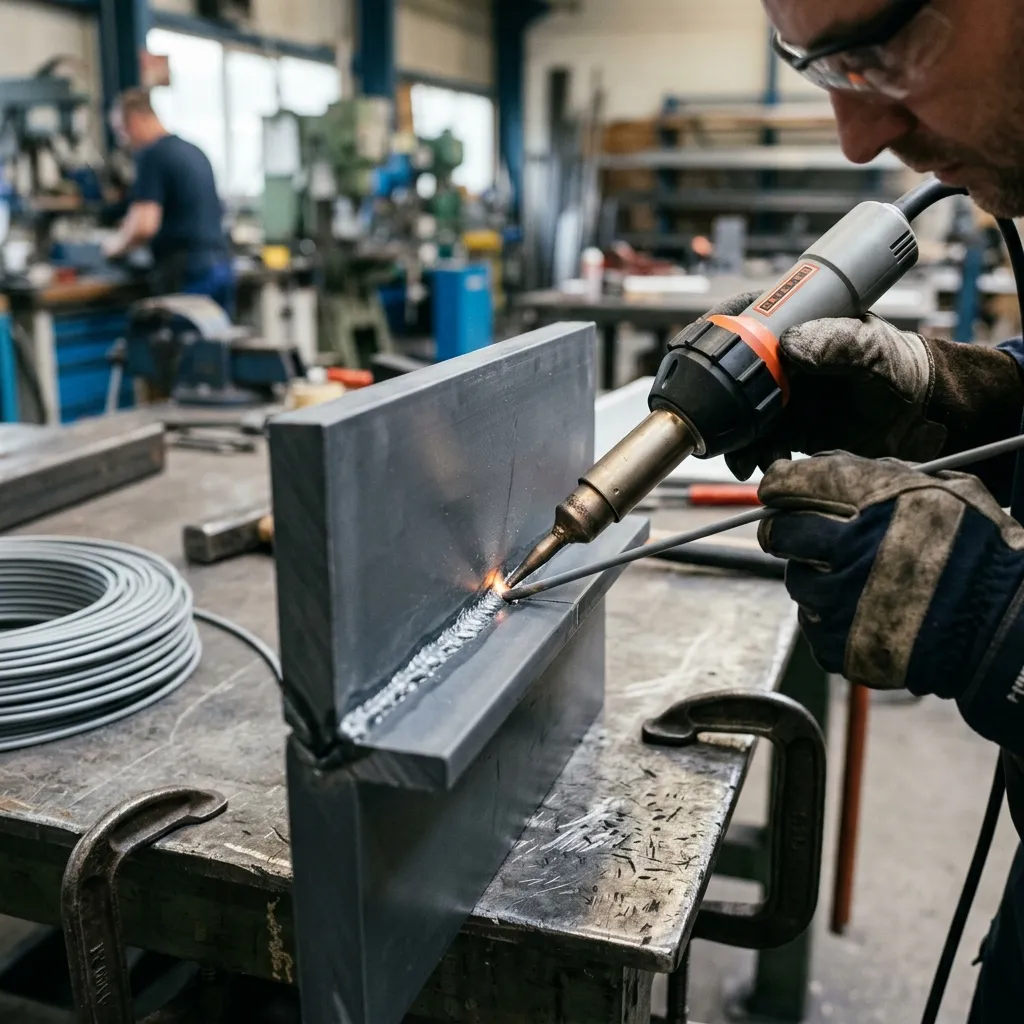
Plastic welding is a method of permanently joining thermoplastic materials by controlled softening of their surfaces and merging them into one structure after cooling. In practice, this means that the appropriately selected base material and filler are joined not on the surface, but in the joint zone to form a uniform connection.
Hot air or extrusion technique are most often used for this purpose. The choice of method depends on the type of material, element thickness, detail geometry and whether the most important thing is tightness, mechanical strength, or both simultaneously.
In a well-designed process, not only the devices are important, but also:
material compatibility of the filler and the base element,
proper working temperature,
welding speed,
appropriate pressure,
edge preparation before starting work.
These details determine whether the finished connection will be stable in everyday use or will only appear to be correct.
Which thermoplastic materials can be joined by welding
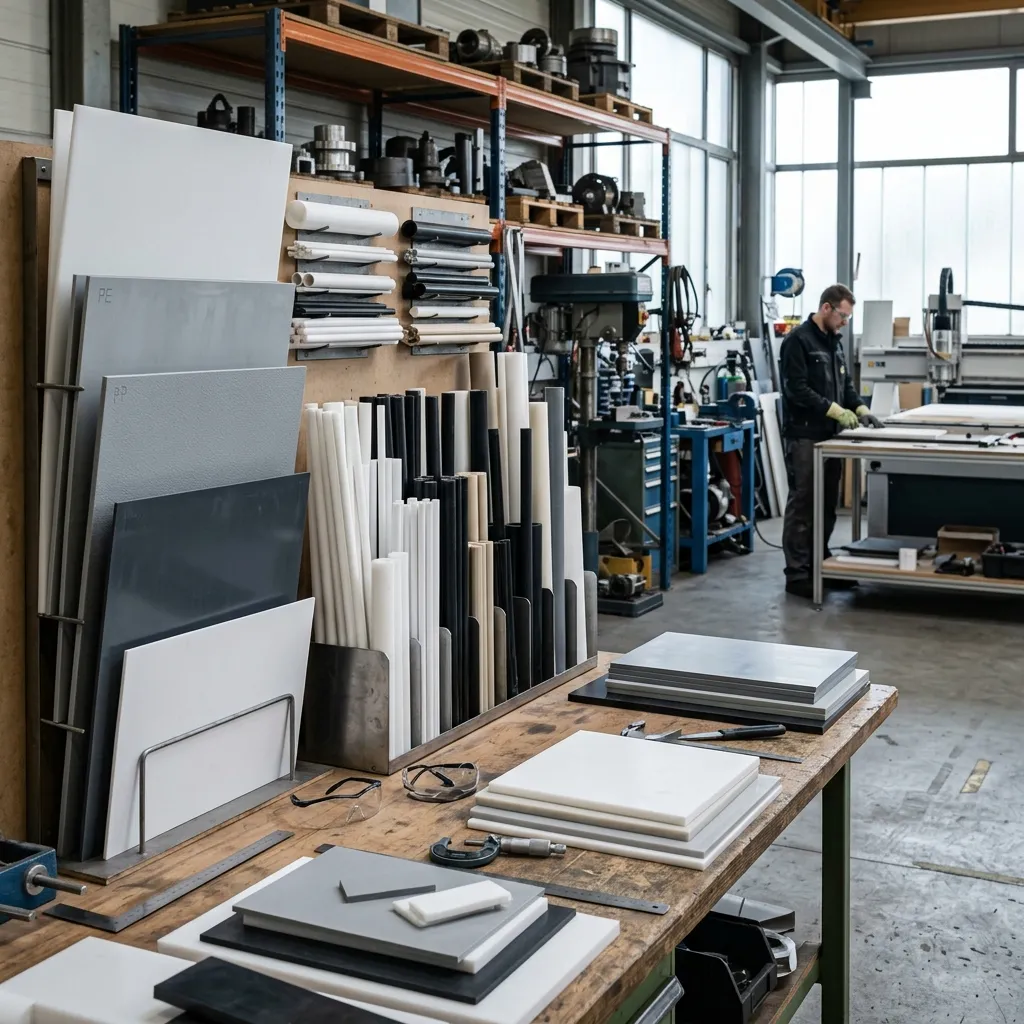
Not every plastic is suitable for welding. This technology applies exclusively to thermoplastics, which are those that soften under heat and can be reformed without changing their fundamental chemical structure.
In practice, we most often perform the joining of thermoplastic materials used in technical and industrial elements, such as:
PE – valued for its chemical resistance and wide application in tanks, pipes, and installation elements,
PP – often chosen for components working in demanding technological environments,
PVC – used among others in installations and elements requiring good rigidity and resistance to certain media.
It is important to remember that effective plastic welding requires material compatibility. Different polymers are not randomly joined just because they look similar. If the material is not properly identified, even an aesthetic seam may not provide the expected durability.
Do you have a part without certain material identification? This is a common scenario in repairs and parts used in production. In such a situation, the most important thing is to identify the plastic first and then choose the technology. This way, you can avoid the cost of poorly performed repairs and downtime that returns after a few days or weeks.
How to prepare elements for welding
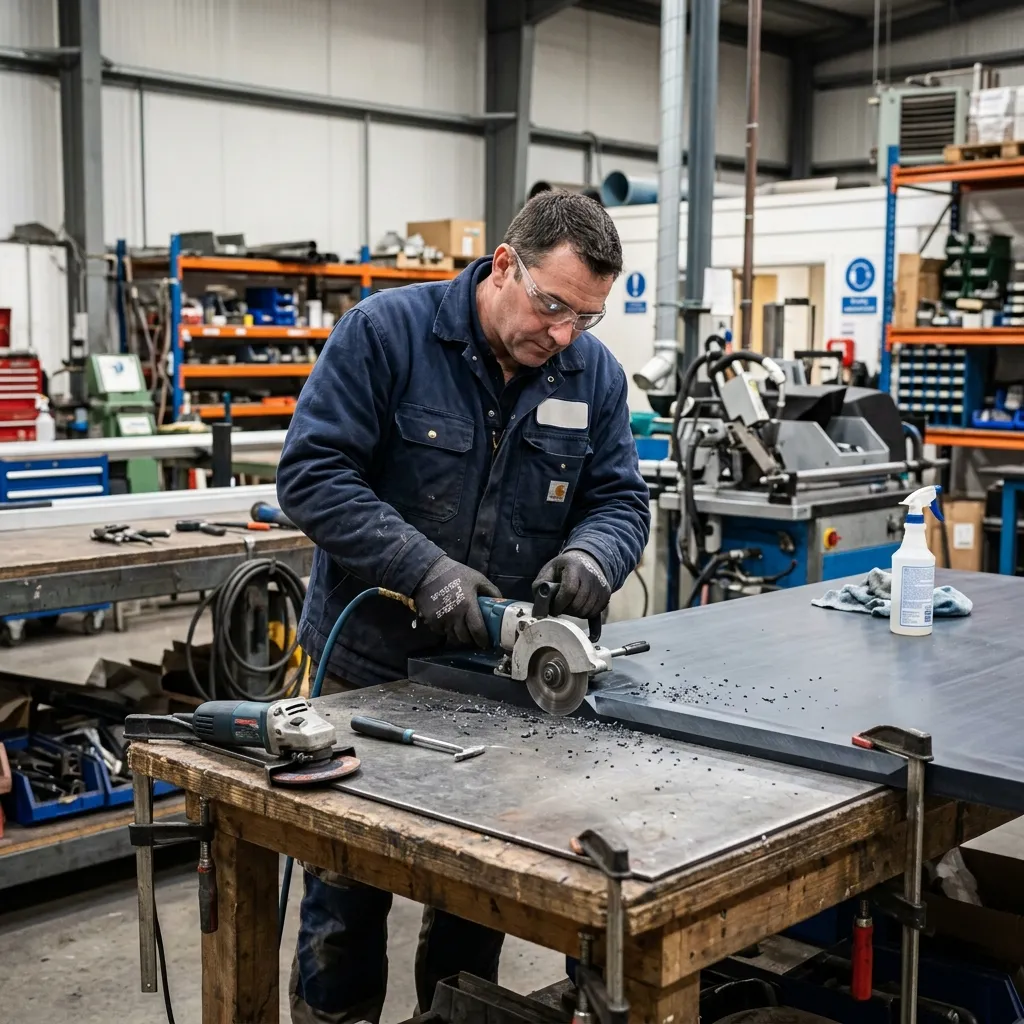
The quality of the weld starts even before the device is turned on. Even the best equipment cannot make up for a dirty surface, poorly prepared edge, or moisture present in the joining area. Therefore, we do not treat the preparation of elements as a formality, but as one of the key stages of the entire service.
A typical preparation process includes:
assessment of material type and element condition,
cleaning the surface of dirt, grease, and operational residues,
preparing the edge for the weld,
stabilizing the element before welding,
selecting the appropriate filler and process parameters.
When repairing, damage assessment becomes particularly significant. Cracking, delamination, local wear, or previous unsuccessful bonding affect the way work is carried out. That is why we do not treat each order the same. The approach to a new production element differs from that to a part that has already worked under load.
What does the durability of a welded joint depend on
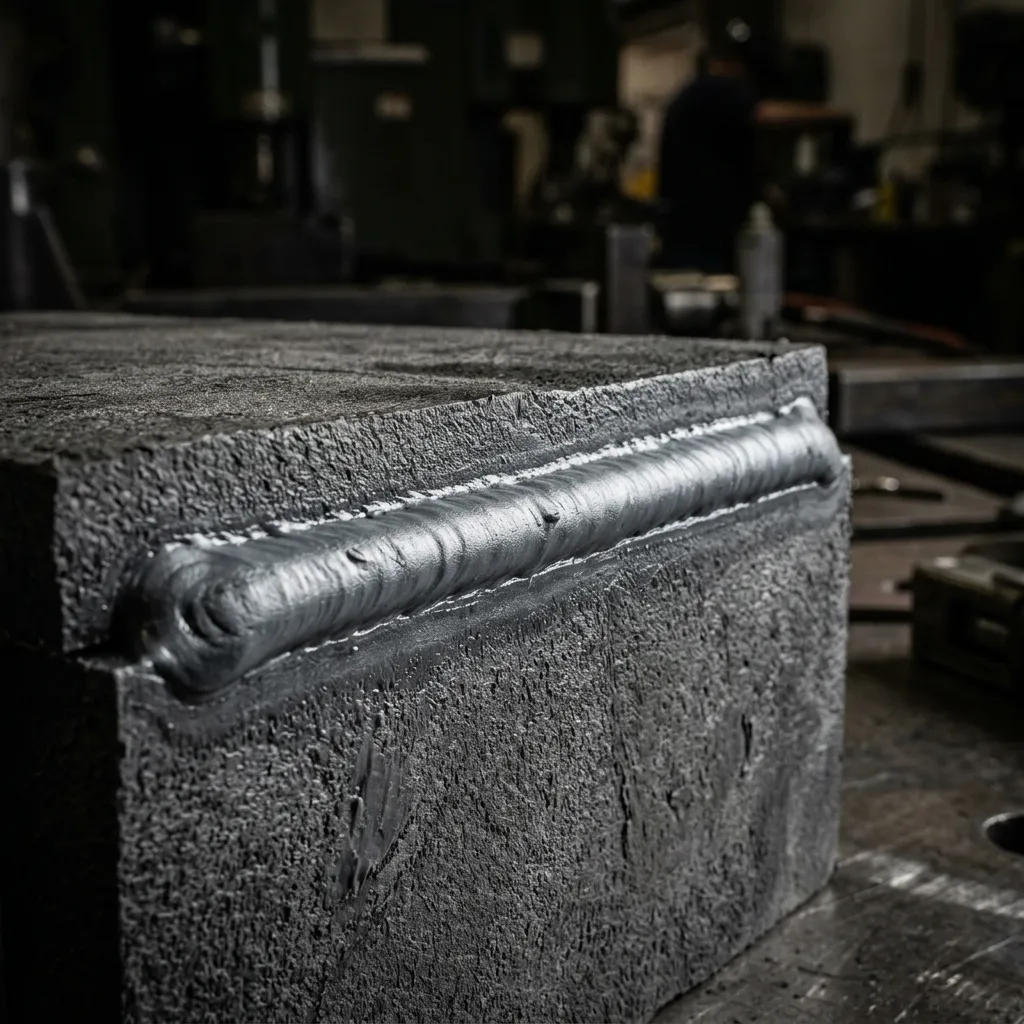
The durability of the weld is not a matter of chance. It results from the combination of the right material, proper preparation, stable parameters, and the experience of the operator. In technical applications, it matters not only whether the element looks good after the service is performed but also whether it will maintain its tightness and function over time.
The final effect is primarily influenced by:
chemical compatibility of the material and filler,
condition of the surface before welding,
geometry of the joined edges,
conditions of the process,
subsequent mechanical, thermal, and chemical stresses.
This is especially important where the element is to work in contact with moisture, technological media, fumes, or variable temperatures. Simply being able to make a weld is not enough. What matters is whether the finished joint will meet real working conditions.
From the client's perspective, this means one thing: a good service does not end with just "welding the plastic." A good service starts with the right questions and an accurate assessment of whether a given part is indeed suitable for a durable connection.
Welding PE, PP and PVC in technical elements
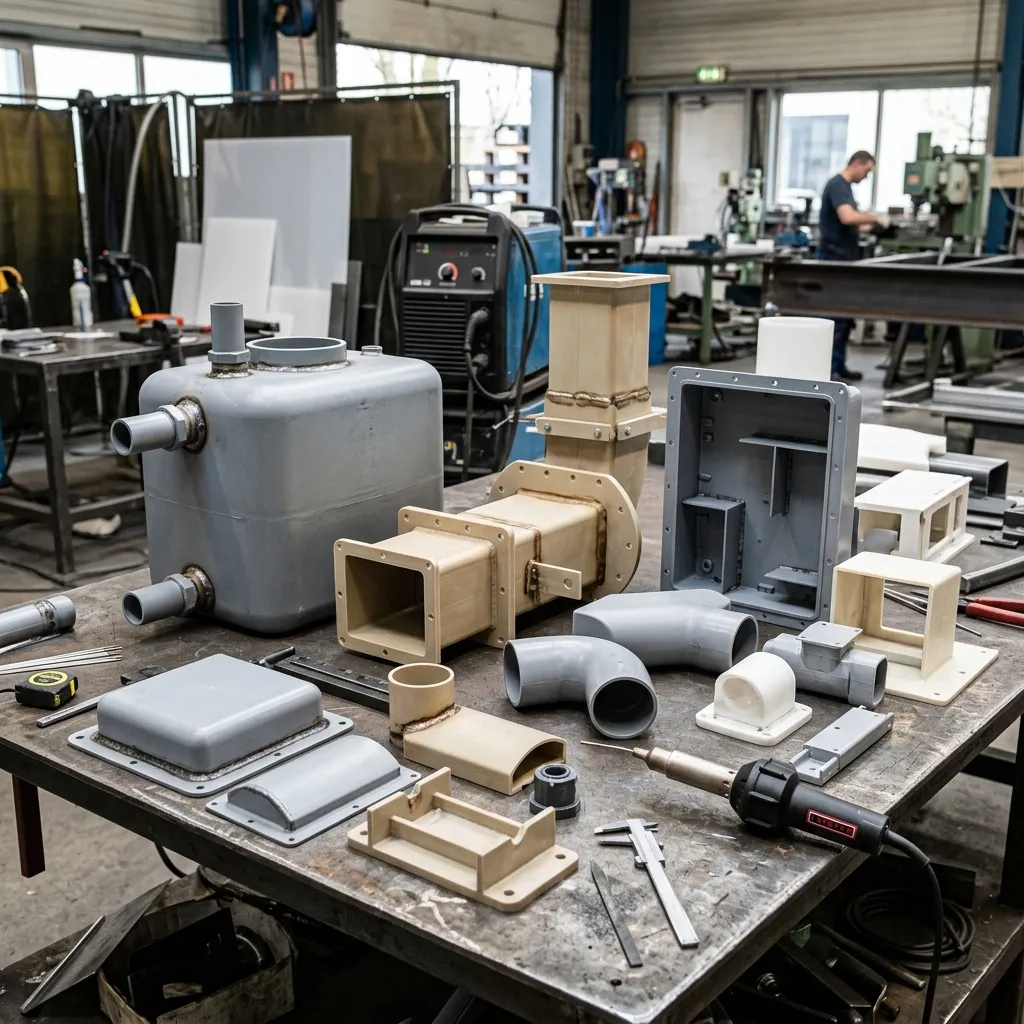
PE, PP, and PVC are materials that very often appear in industrial and technical environments. They are used where resistance to moisture, contact with selected chemical substances, or stable operation in an installation is needed. That's why welding PE, PP, and PVC has such wide applications in the production, service, and modernization of elements.
Depending on our needs, we perform work related to elements such as:
technical covers and enclosures,
tanks and auxiliary components,
channels, conduits, and installation elements,
details used in unit or small batch production,
parts requiring repair after cracking or leakage.
Each of these materials behaves differently during processing. Therefore, joining thermoplastic materials must take into account not only the type of polymer but also its thickness, stiffness, usage history, and expected final effect. This is particularly important for technical parts, where not decorative appearance but predictable operation after assembly matters.
Do you have a component for repair or a new detail to make? Describe the application of the element, the working environment, and the expected function of the weld. The more we know from the start, the faster we can propose a solution that will make sense not only workshop-wise but also operationally.
Joining thermoplastics for industry and production
In the production environment, there is no room for accidental material decisions. The component must fit the process, withstand working conditions, and not generate problems during servicing. Therefore, joining thermoplastics is now an important part of many industries' implementations - from simple details to more complex technical components.
This technology is particularly effective when the following are needed:
tight connections in elements working in installation,
repairs that limit the cost of replacing the entire part,
performance of non-standard details for the needs of a specific process,
short production runs without the need to invest in expensive molds,
solutions resistant to demanding work environments.
For companies, this means greater flexibility. Instead of seeking a compromise between parts availability and downtime costs, you can order a service tailored to the real problem. In many cases, it is properly performed plastic welding that allows you to return to work faster and avoid unnecessary replacement of the entire component.
How to order plastic welding service
The better the inquiry is prepared, the faster you can move from conversation to a concrete quote. You don't need to know all the technological parameters, but a few pieces of information significantly streamline the assessment of the order.
In the application, it is worth providing:
what material the element is made of or what its designation is,
whether it is a repair, modification, or the creation of a new detail,
what are the dimensions and thickness of the element,
in what conditions the finished part will work,
whether the main concern is sealing, load-bearing, aesthetics, or a combination of these features,
whether technical documentation, photos, or a sample of the material is available.
On this basis, we can assess whether welding will be the right technology, how to approach the execution, and what information is still needed for a precise quote. It's a simple stage that often determines whether the project will start smoothly or will need to be refined.
At Inbras, we focus on a partnership approach to orders. We do not sell a service in the dark. First, we check whether plastic welding will really be the best solution for a given element, and only then do we proceed with the execution. This way, the client knows from the beginning what to expect and what they can expect.
Tak, pod warunkiem że spawany jest właściwy materiał, powierzchnia została dobrze przygotowana, a parametry procesu dobrano do konkretnego detalu. Trwałość zależy więc nie tylko od samej metody, ale też od jakości wykonania i późniejszych warunków pracy elementu.
W wielu przypadkach tak, ale trzeba ocenić rodzaj tworzywa oraz środowisko pracy. Nie każdy materiał sprawdzi się tak samo w kontakcie z wilgocią, temperaturą czy substancjami chemicznymi, dlatego dobór technologii zawsze warto oprzeć na rzeczywistym zastosowaniu części.
Tak, wiele pękniętych elementów można naprawić, o ile materiał nadaje się do spawania i uszkodzenie nie wyklucza trwałego odtworzenia funkcji części. Każdy przypadek wymaga jednak wcześniejszej oceny stanu technicznego detalu.
Nie. Do spawania nadają się przede wszystkim tworzywa termoplastyczne. Jeśli element wykonano z materiału termoutwardzalnego albo jest on silnie zdegradowany, spawanie może nie dać oczekiwanego efektu albo w ogóle nie być możliwe.
Spoiwo musi być dopasowane do materiału bazowego. Druty do PE, PP i PVC różnią się właściwościami oraz zachowaniem podczas spawania, dlatego nie stosuje się ich zamiennie. Dobór odpowiedniego spoiwa to jeden z warunków uzyskania trwałego połączenia.
If you are looking for a contractor who understands that not only the weld itself matters, but the entire technical context of the element, you are in the right place. At Inbras, we combine workshop experience with a practical approach to industrial and production applications. Thanks to this, we can advise, perform the service and help choose a solution that just works.