


Machining
A precise detail can determine the operation of the entire machine. Just one incorrect dimension, mismatched material, or too large of a deviation, and the production line loses its fluidity, forcing the technical team to face costly downtimes. Therefore, machining is not just a service of making a part from metal or plastic. It is a process in which technology, operator experience, proper machine selection, technical documentation, and quality control at every stage matter.
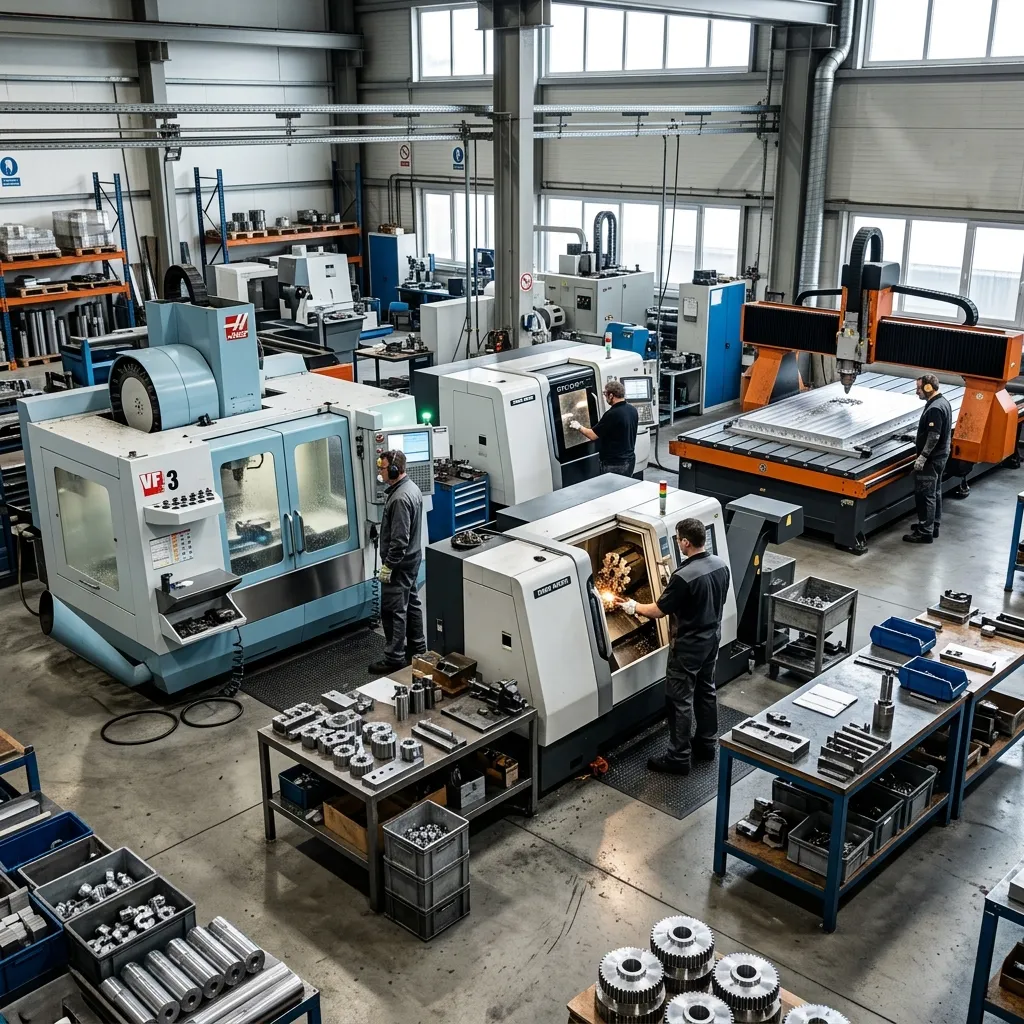
Range of machining services for industry
Machining is a technological process involving the controlled removal of excess material using cutting tools. In practice, it allows obtaining a specific shape, dimension, tolerance, and surface quality of the finished part. This is especially important where the component must fit into an existing system, work under load, or maintain repeatability in subsequent production batches.
The scope of services offered by Inbras includes primarily:
CNC turning of rotating elements,
conventional turning of single, repair, and larger parts,
CNC milling of parts with more complex geometry,
CNC plotter milling for large-format materials,
sawing, threading, and rolling,
CAD/CAM design and programming,
manufacturing elements from metals and engineering plastics.
Such a wide range of work allows selecting the method according to the real application of the part, rather than the other way around. Planning the execution of a prototype differs from short series, and repeatable elements that must maintain identical parameters with each order are planned differently.
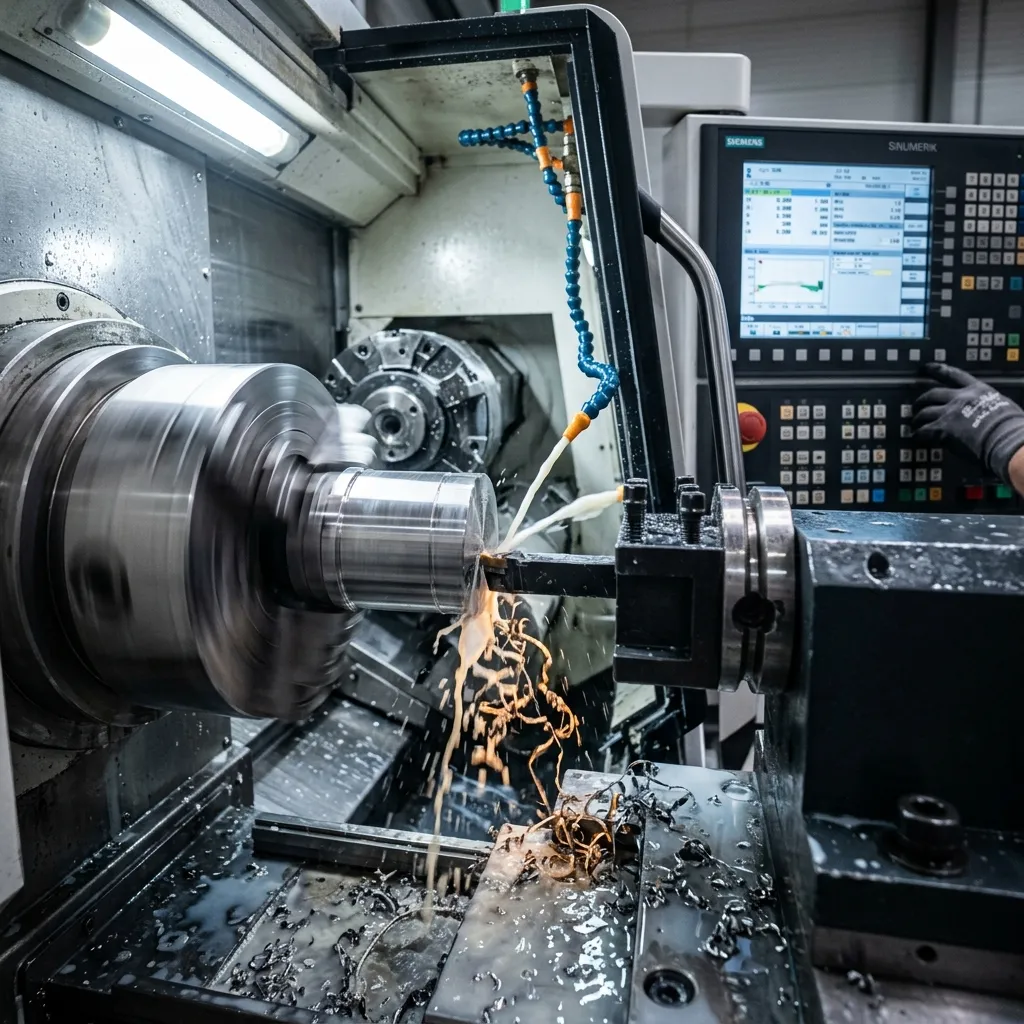
CNC turning of elements requiring precision and repeatability
CNC turning is particularly suitable when the part has the shape of a rotational body and requires high dimensional accuracy. Computer numerical control allows programming tool movement, controlling machining parameters, and maintaining repeatability for subsequent pieces.
This is a good solution for producing elements such as:
bushings,
shafts,
axes,
rings,
rollers,
bearings,
spacer elements,
sealing system parts.
In Inbras, CNC turning is performed on a HASS turning center. The maximum turning diameter is Ø 229 mm, and the maximum turning length is 300 mm. These parameters are well-suited for precise industrial details, where not only the shape matters but also compliance with technical documentation.
The greatest advantage of CNC turning is process stability. After correctly preparing the program, it is possible to produce a series of parts with the same parameters. This reduces the risk of errors, shortens production time, and facilitates maintaining quality in subsequent batches.
Do you have a technical drawing or sample detail? Send an inquiry, and we will select the appropriate manufacturing technology and prepare a quote.
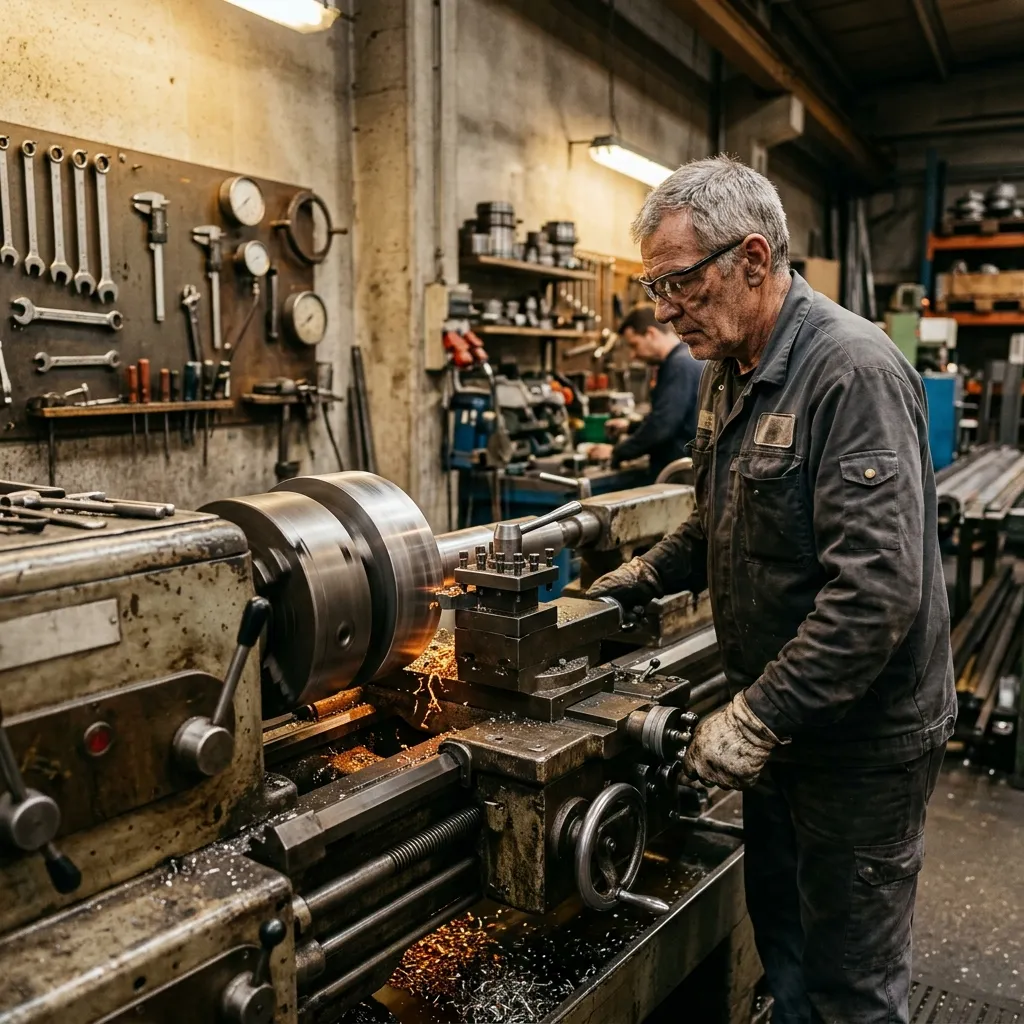
When is it worth choosing conventional turning?
Not every order requires CNC machine programming. In many cases, conventional turning is a faster, more flexible, and economically justified solution. This is especially true for single-piece production, service work, part replication, and components with larger diameters.
Conventional turning should be considered when:
a single part is needed,
the part is to be made based on a pattern,
a quick response is necessary for machine repair,
the part has a larger diameter than the standard CNC center range,
the geometry of the element does not require an advanced CAM program.
At Inbras, conventional turning allows for machining elements with a maximum diameter of 550 mm and a length of up to 300 mm. This is important for repair parts, technical components, and parts that would be difficult to produce on a smaller turning center.
In this method, the operator's experience is of great importance. They continuously monitor the process, respond to material behavior, and can make adjustments without the need to re-prepare the program. Therefore, conventional turning remains an important element of the production infrastructure in the industry.
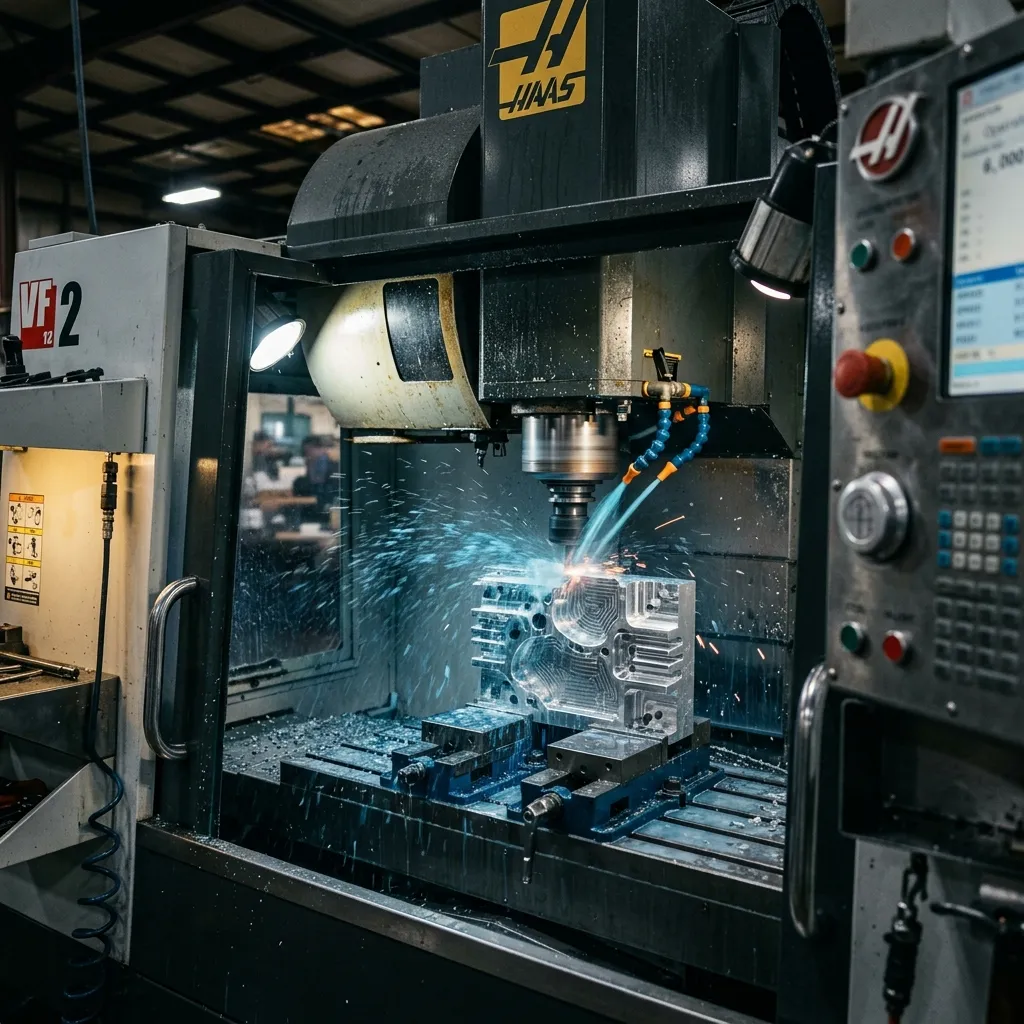
CNC Milling on a Machining Center for Complex Details
CNC milling allows the creation of parts with more complex geometry than turning. The cutting tool operates in the axes of the machine, enabling the machining of planes, pockets, grooves, holes, edges, and spatial forms.
At Inbras, CNC milling is performed on the HASS vertical machining center with travel ranges:
X axis – 1016 mm,
Y axis – 508 mm,
Z axis – 635 mm.
Such operating capabilities make it possible to produce both smaller technical details and larger structural elements requiring stable machining. CNC milling is particularly useful for components that must maintain accurate hole positions, appropriate flatness, dimensional repeatability, and proper surface quality.
This method is used, among others, in the production of:
enclosures,
bodies,
technical plates,
guides,
sliding elements,
machine parts,
assembly components,
2D and 3D geometry details.
A well-prepared CNC milling process can reduce the number of manual operations. This is important because each additional operation can increase the risk of deviations, prolong execution time, and raise the cost of production.
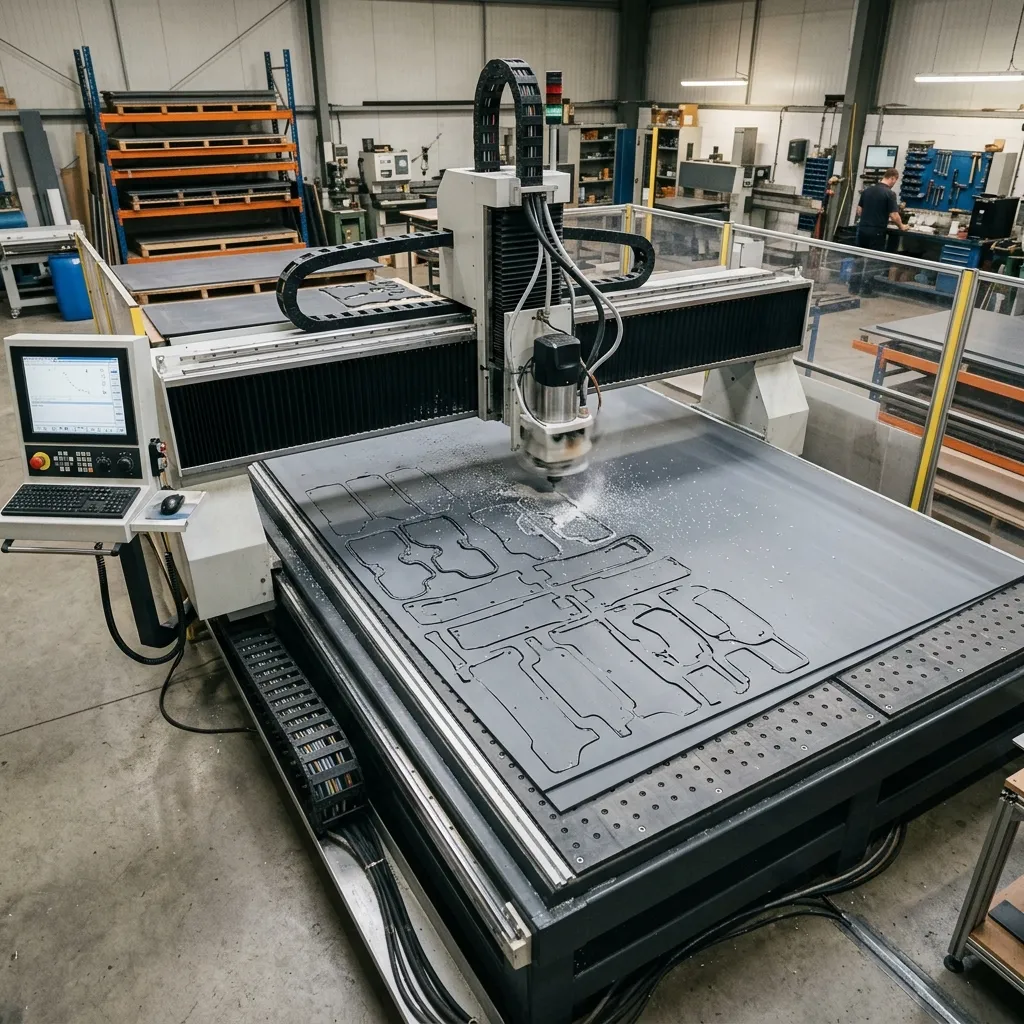
CNC Plotter Milling for Larger Material Formats
Some details primarily require a large working area. That's when CNC plotter milling is used. This technology works well for processing sheets, boards, and materials that have a larger surface area but do not always require deep, multi-axis spatial processing.
At Inbras, the CNC plotter has a working area of 3100 × 2100 mm. This allows for processing larger material formats and efficiently planning the cutting of many elements from a single board.
CNC plotter milling can be a good choice for:
large-format plastic sheets,
technical shields,
gaskets,
guiding elements,
flat details,
components from sheet materials,
processing contours, grooves, and holes.
A big advantage of this method is the ability to optimize cutting layout. Correct placement of details on the sheet allows for material waste reduction, which is significant both cost-wise and organizationally.
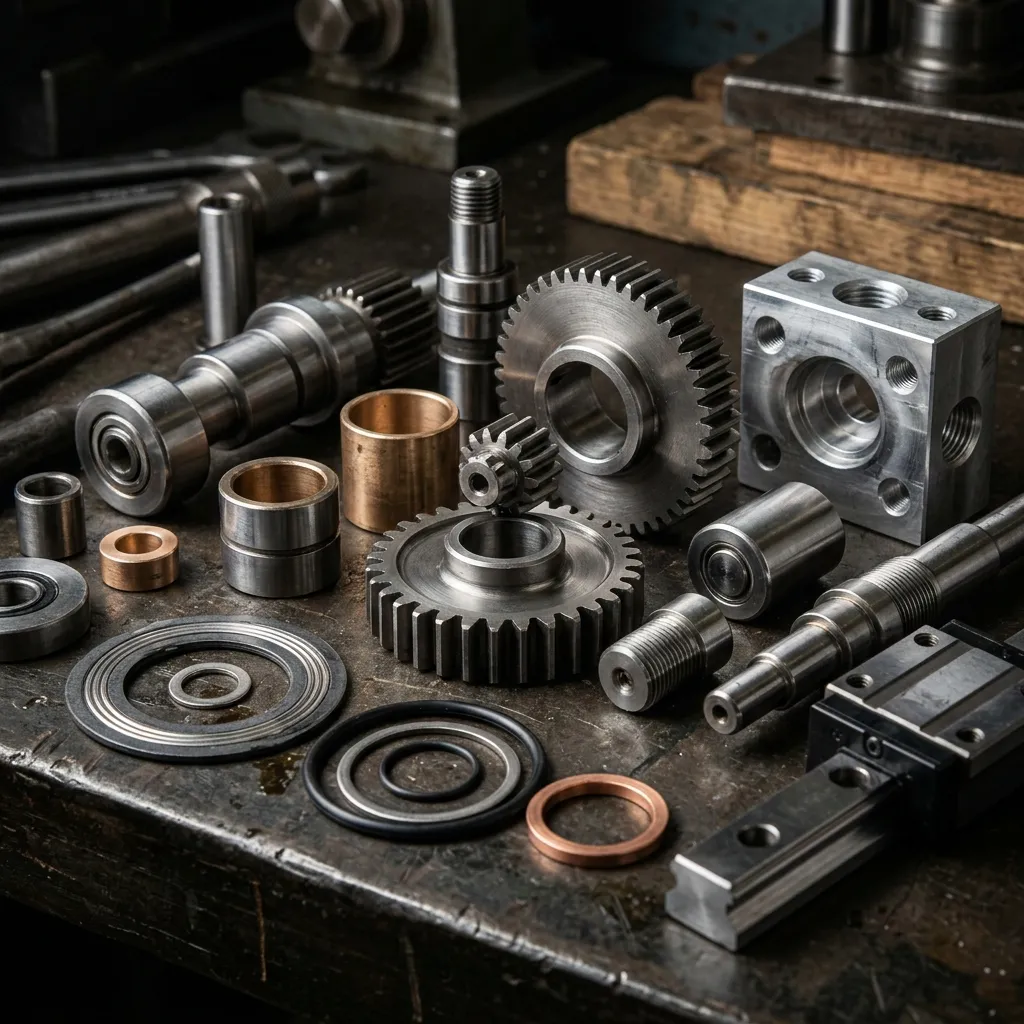
What elements can be made using machining?
Machining offers very broad manufacturing possibilities. Depending on the documentation, material, and expected parameters, it is possible to produce both simple spare parts and more responsible technical components.
At Inbras, the following are manufactured, among others:
gears,
sliding elements,
guides,
bushings,
rollers,
spiral seals,
seal rings,
sealing covers,
agitators,
scrapers,
sleeves,
shafts,
spacer elements,
machine and equipment parts.
Each of these elements can perform a different function in a mechanical system. Some are responsible for transmitting motion, others for guiding, sealing, reducing friction, or securing components. Therefore, when machining, it is not enough to make a “similar” detail. It is necessary to maintain the proper material, dimension, tolerance, and finish quality.
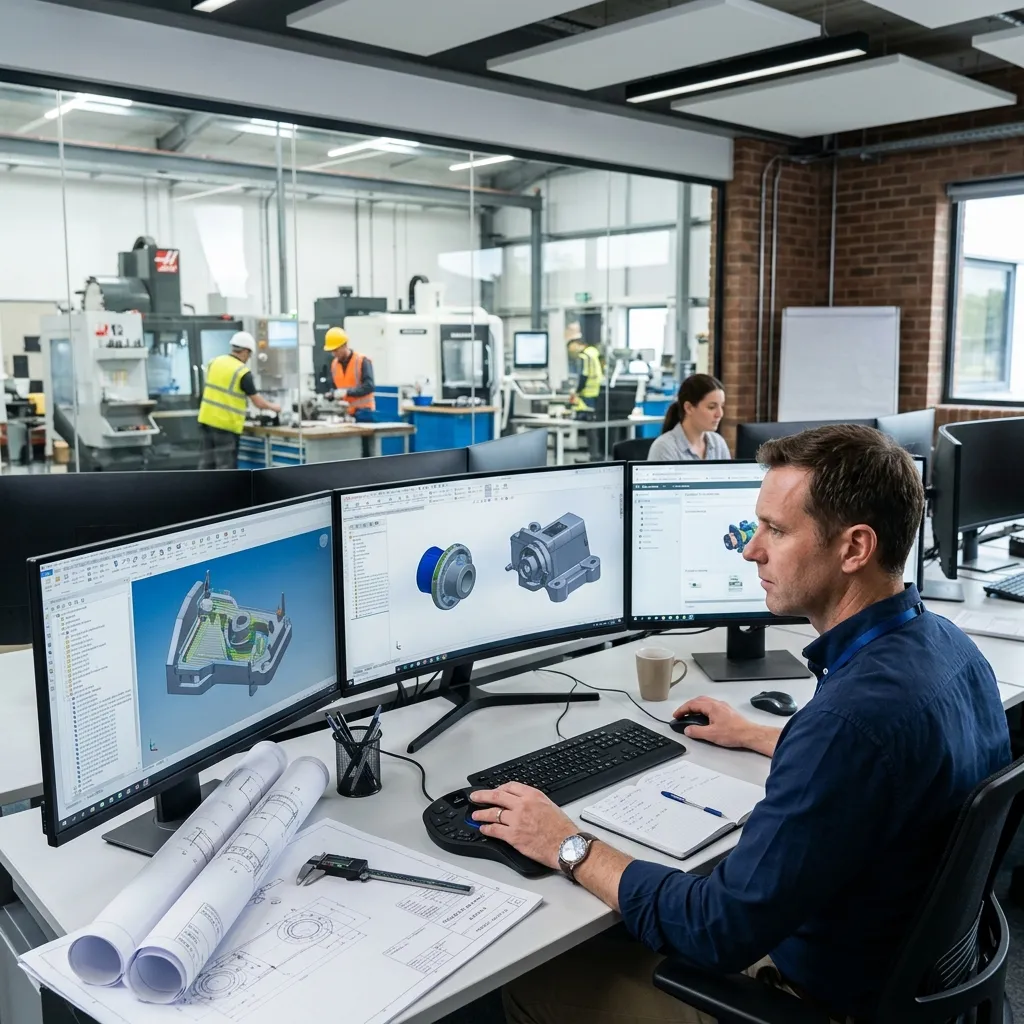
CAD/CAM design as support for the production of details
Professional machining increasingly begins even before the machine is started. Key importance lies in the preparation of documentation, model, and processing program. CAD/CAM systems are used for this purpose, which support the design of the detail and the planning of tool work.
CAD allows developing a model or technical documentation. CAM enables the preparation of tool paths, which are then used by CNC machines. Thanks to this, the process flow can be better predicted, errors reduced, and execution time optimized.
CAD/CAM design and programming is particularly helpful when:
the client only has a pattern of the detail,
the documentation requires refinement,
the part has a complicated geometry,
the appropriate sequence of operations needs to be selected,
machining time needs to be minimized,
the detail is to be repeatable in subsequent series.
In practice, CAD/CAM support shortens the path from the idea or technical need to the finished element. This is important in industries where precision, predictability, and a quick response to maintenance needs are important.
If you do not have full documentation, but you have a sample of the element or a description of the need, contact us. We will check how we can prepare the detail for production.
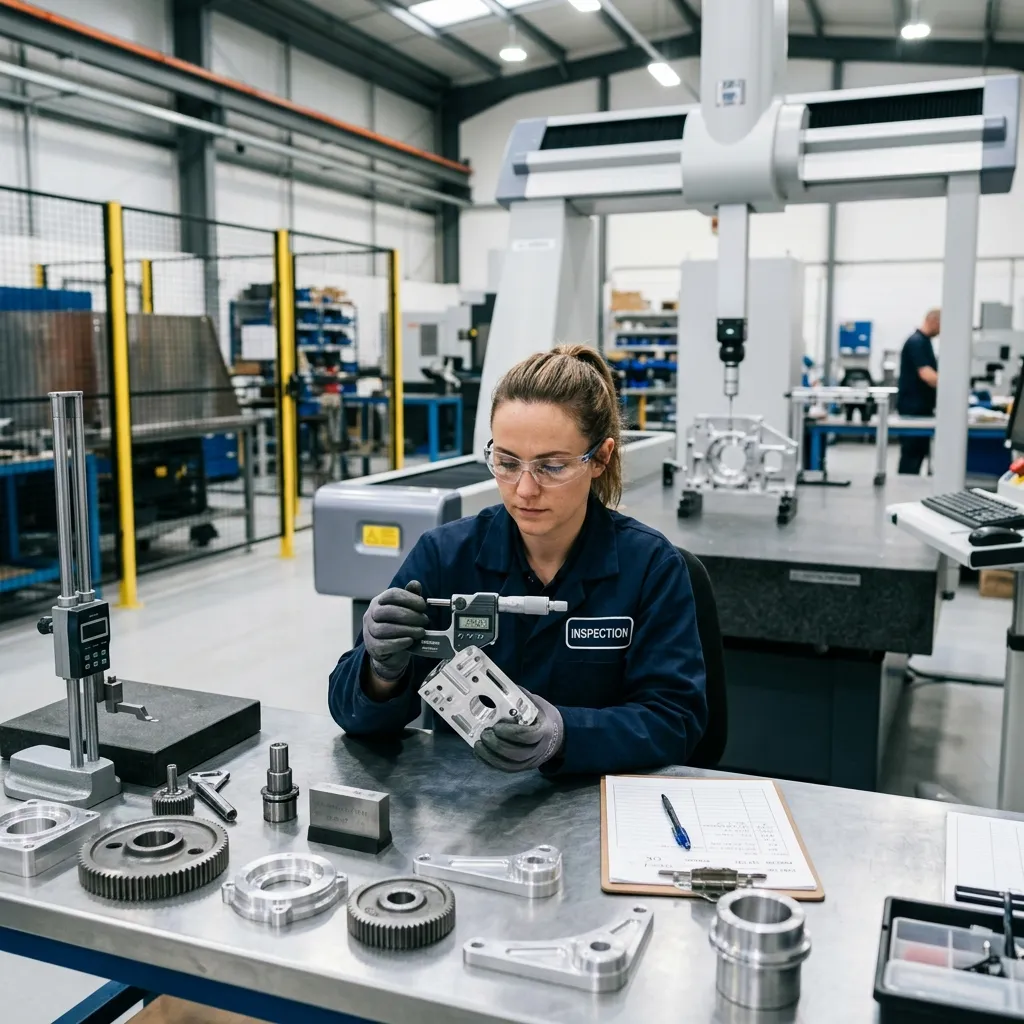
Quality control and timeliness in order fulfillment
In machining, quality cannot be assessed solely "by eye." The finished part must comply with technical assumptions, as it often goes directly to a machine, installation, or production system. If the dimension is not maintained, the problem only becomes apparent during assembly or during device operation.
Therefore, important are:
analysis of the inquiry before starting work,
selection of the appropriate technology,
control of parameters during production,
verification of the finished element's dimensions,
compliance with client documentation,
realistic scheduling of completion dates.
Timeliness is as important as accuracy. In industry, the delay of one part can halt assembly, service, or commissioning of the production line. Therefore, at Inbras, inquiries are analyzed considering technology, material, production capabilities, and schedule. This allows for the preparation of an offer that is not only cost-effective but also feasible to execute.
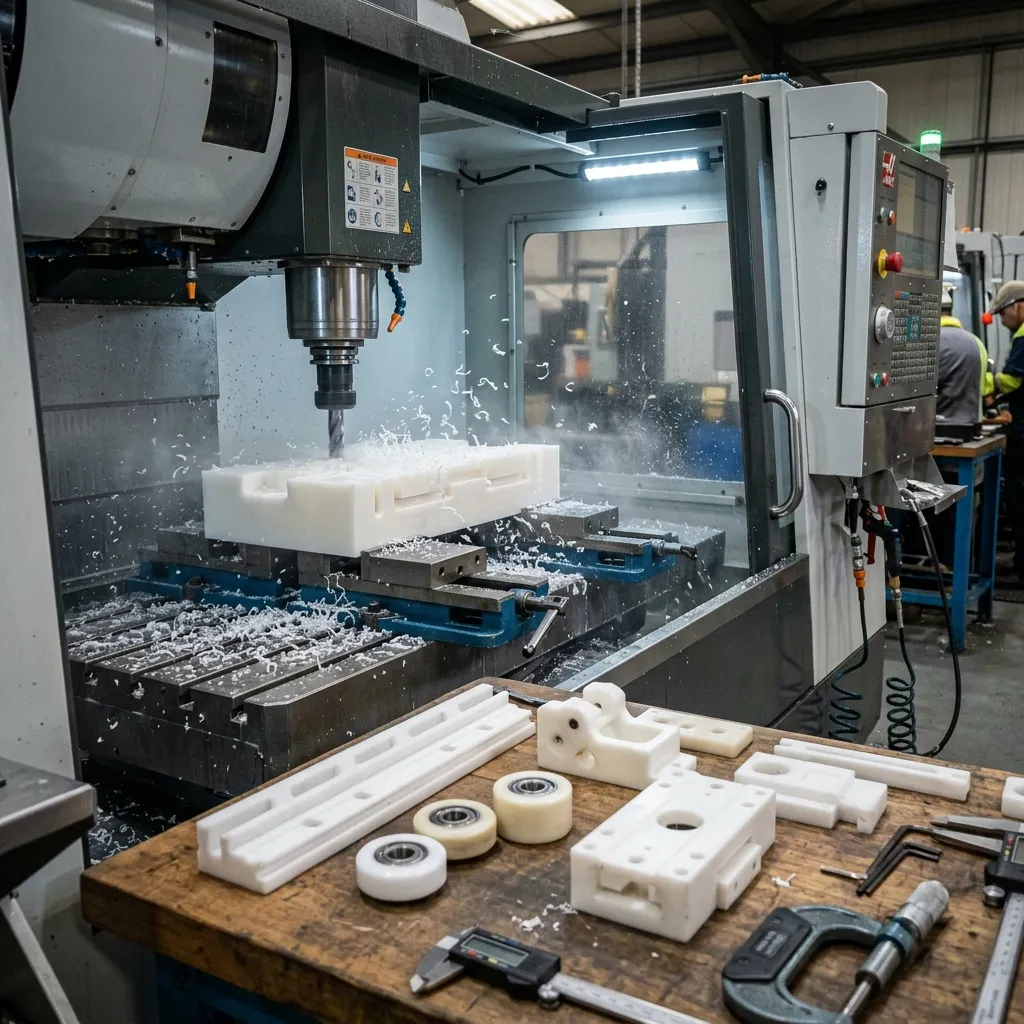
Machining of plastics for various industries
Machining is not limited to metals. In many industrial applications, engineering plastics play a very important role. They are lightweight, chemically resistant, often have good sliding properties, and can replace metal where weight reduction, insulation, or resistance to a specific working environment are important.
Plastics used in machining may require a different approach than steel or aluminum. During machining, their temperature sensitivity, potential for deformation, and edge retention after machining must be taken into account. Parameter selection is of great importance here, because too aggressive machining can lead to overheating, melting, or deformation of the material.
Engineering plastic components are used, among others, in the following industries:
machine,
energy,
aviation,
automotive,
chemical,
food,
production and maintenance.
Depending on the application, these can be guides, bearings, rollers, sliding elements, scrapers, seals, covers, and parts working in contact with other machine components.
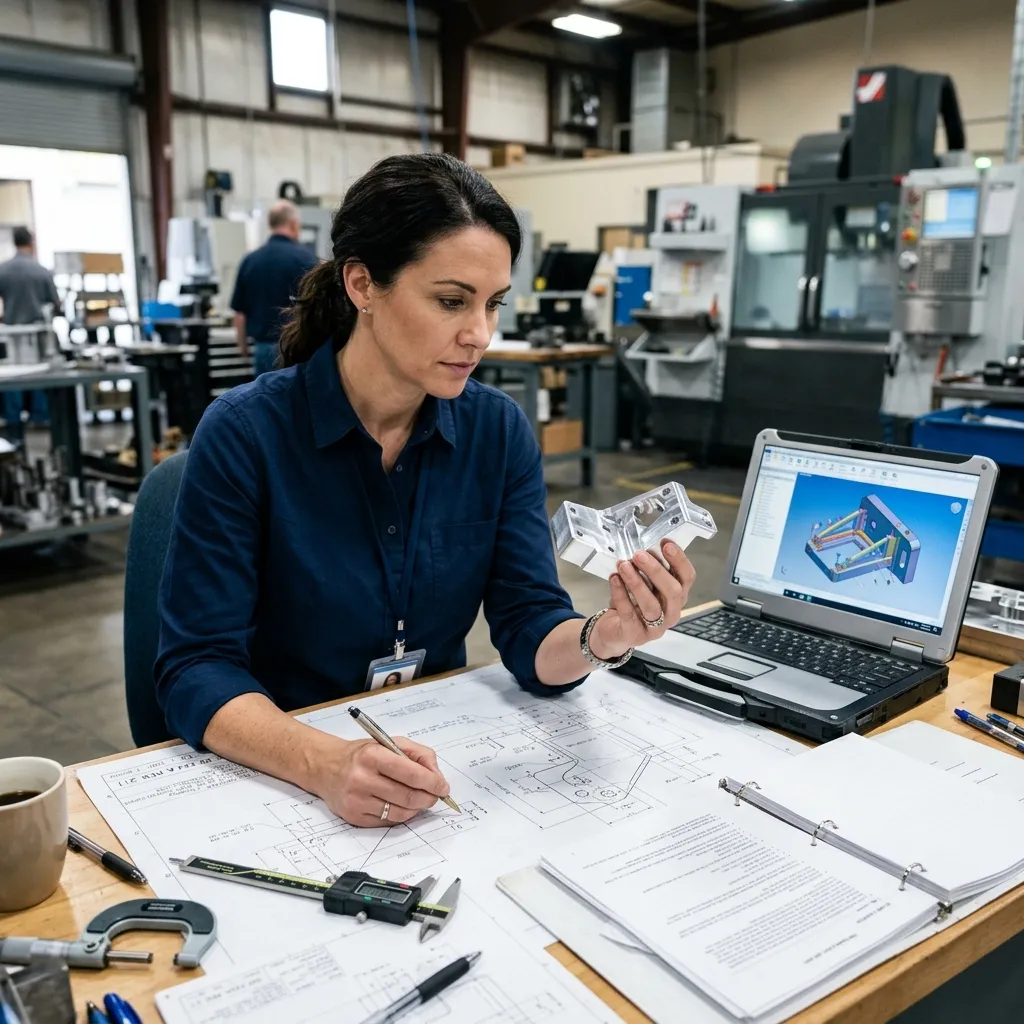
How to prepare a request for quotation for machining?
Well-prepared request for quotation reduces the valuation time and minimizes the risk of misunderstandings. The more specific data the technical department receives, the easier it is to choose the execution method, estimate machine working time, and indicate the real production cost.
It's worth including in the request:
2D technical drawing in PDF, DXF, or DWG format,
3D model, e.g., STEP, STP, or IGS,
information about the material,
quantity,
required tolerances,
expected surface roughness, if relevant,
information about additional processing,
delivery date,
delivery or pickup details.
If you do not have full documentation, it is worth describing the function of the detail and its working conditions. A sliding element is designed differently, a load-carrying part differently, and a cover or seal differently. Such information helps choose the technology and material for the actual application.
Prepare a drawing, 3D model, or photo of the element and describe where the detail will work. Based on this, it will be easier for us to propose a precise and economical solution.
Toczenie CNC jest sterowane komputerowo, dlatego najlepiej sprawdza się przy detalach wymagających wysokiej powtarzalności i produkcji seryjnej. Toczenie konwencjonalne opiera się na pracy operatora i daje większą elastyczność przy pojedynczych elementach, naprawach, prototypach oraz częściach o większych gabarytach.
Najlepiej przesłać rysunek techniczny, model 3D, informację o materiale, liczbę sztuk, wymagane tolerancje oraz oczekiwany termin realizacji. Jeżeli dokumentacja nie jest kompletna, pomocny będzie również wzór detalu, zdjęcia oraz opis jego zastosowania.
Tak. Obróbka skrawaniem może obejmować zarówno pojedyncze części, jak i krótkie serie produkcyjne. Przy prostych lub naprawczych detalach często dobrym wyborem jest toczenie konwencjonalne, natomiast przy powtarzalnych częściach warto rozważyć technologię CNC.
Frezowaniu CNC można poddawać wiele materiałów konstrukcyjnych, w tym stal, aluminium, metale kolorowe oraz tworzywa techniczne. Ostateczny dobór parametrów zależy od rodzaju materiału, geometrii detalu, wymaganej dokładności i oczekiwanej jakości powierzchni.
Frezowanie na ploterze CNC warto wybrać przy większych formatach materiału, zwłaszcza płytach i arkuszach. Ta metoda dobrze sprawdza się przy wycinaniu konturów, obróbce elementów płaskich, uszczelek, osłon oraz detali z tworzyw i materiałów wielkoformatowych.
Tak. Inbras oferuje profesjonalne projektowanie oraz programowanie CAD/CAM jako wsparcie produkcji detali. To przydatne szczególnie wtedy, gdy konieczne jest przygotowanie modelu, opracowanie ścieżek narzędziowych lub dostosowanie projektu do możliwości technologicznych obróbki.
Metodą obróbki skrawaniem można wykonać m.in. koła zębate, prowadnice, panewki, rolki, tuleje, wałki, elementy ślizgowe, mieszadła, zgarniacze, pierścienie uszczelniające, uszczelki spiralne oraz osłonki do uszczelek.