

Compensator service
Using highly specialized technical knowledge and engineering staff represented by our company provides a sense of security and assurance of correct operation of compensators. Properly conducted operation allows for a significant extension of the life of compensators and early prevention of potential failures through regular technical inspections.
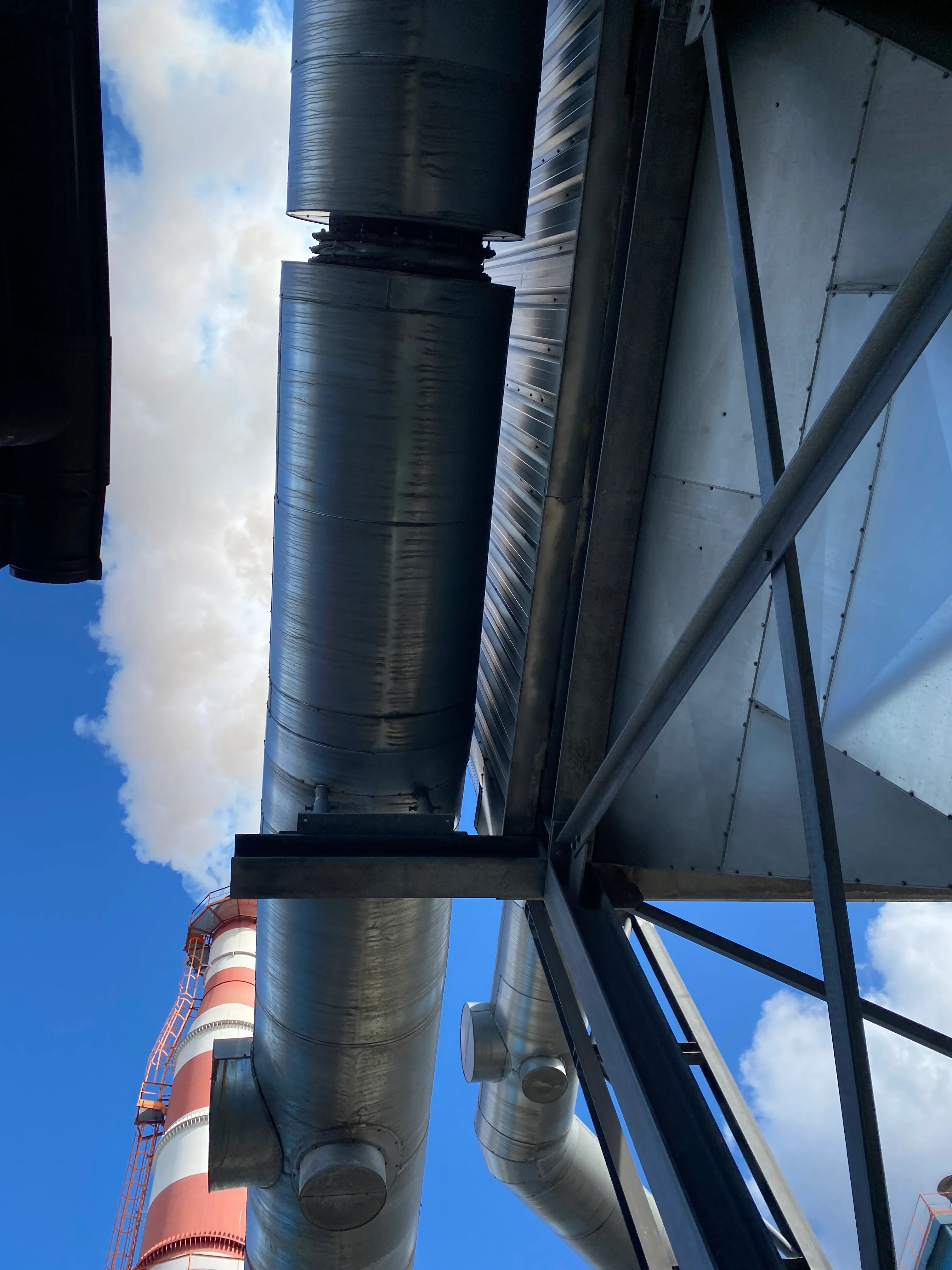
Compensators often work under difficult conditions:
with variable temperatures, pressure, vibrations, aggressive media, or large displacements of the installation. Therefore, their service should not be limited to a superficial inspection. What matters is thorough diagnostics, knowledge of the compensator design, and the ability to assess whether a given component can continue to work safely, needs repair, or should be replaced.
At Inbras, we approach compensator service comprehensively — from technical inspections, through emergency repairs and installation, to engineering consulting, measurements, and compensatory node design. As a result, the client receives not only a service but real support in maintaining the safety and continuity of the installation's operation.
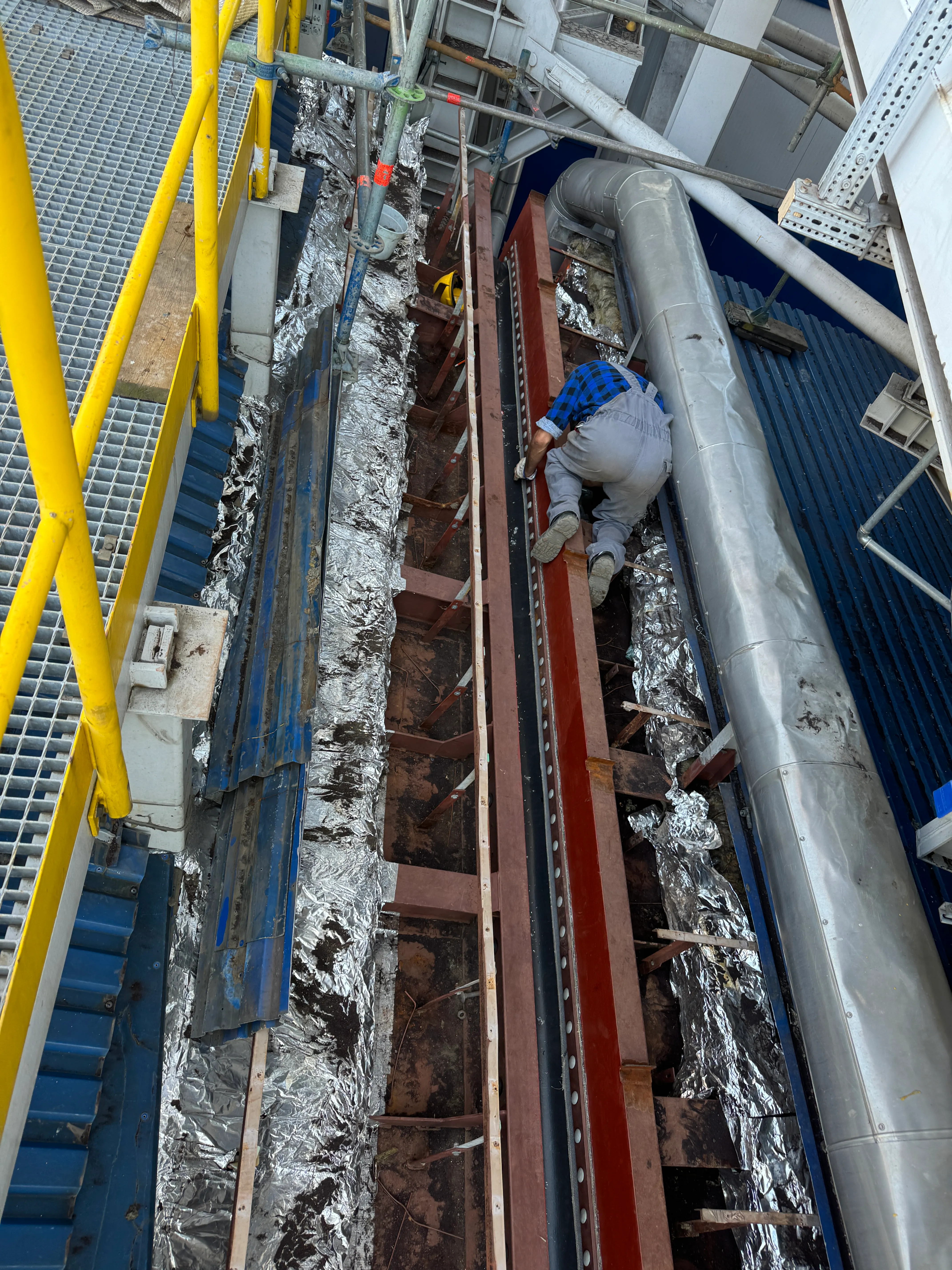
Designing Compensation Nodes and the Safety of the Entire System
A compensator does not work independently. It is part of a larger system, which includes a pipeline or duct, supports, guides, fixed points, movement-restraining elements, and neighboring equipment. Even the best compensator will not function properly if the compensation node is designed or executed incorrectly.
Designing compensation nodes has a direct impact on the safety of the installation. Properly positioned fixed points absorb the pressure thrust forces and limit uncontrolled displacements. Guides and sliding supports direct the pipeline's movement in the appropriate planes, preventing buckling and overloading of the compensator.
The project should take into account, among others:
direction and value of thermal displacements,
forces from internal pressure,
loads from the weight of the pipeline and medium,
impact of vibrations,
placement of equipment such as pumps, turbines, or exchangers,
possibility of safely replacing the compensator in the future,
service and control access.
In high-pressure installations or where classic supports cannot be used, special solutions are designed, e.g., pressure-relieved compensators, elements with cables, hinges or joints. This approach helps to reduce the risk of overloading the system and extends the life of the entire installation.
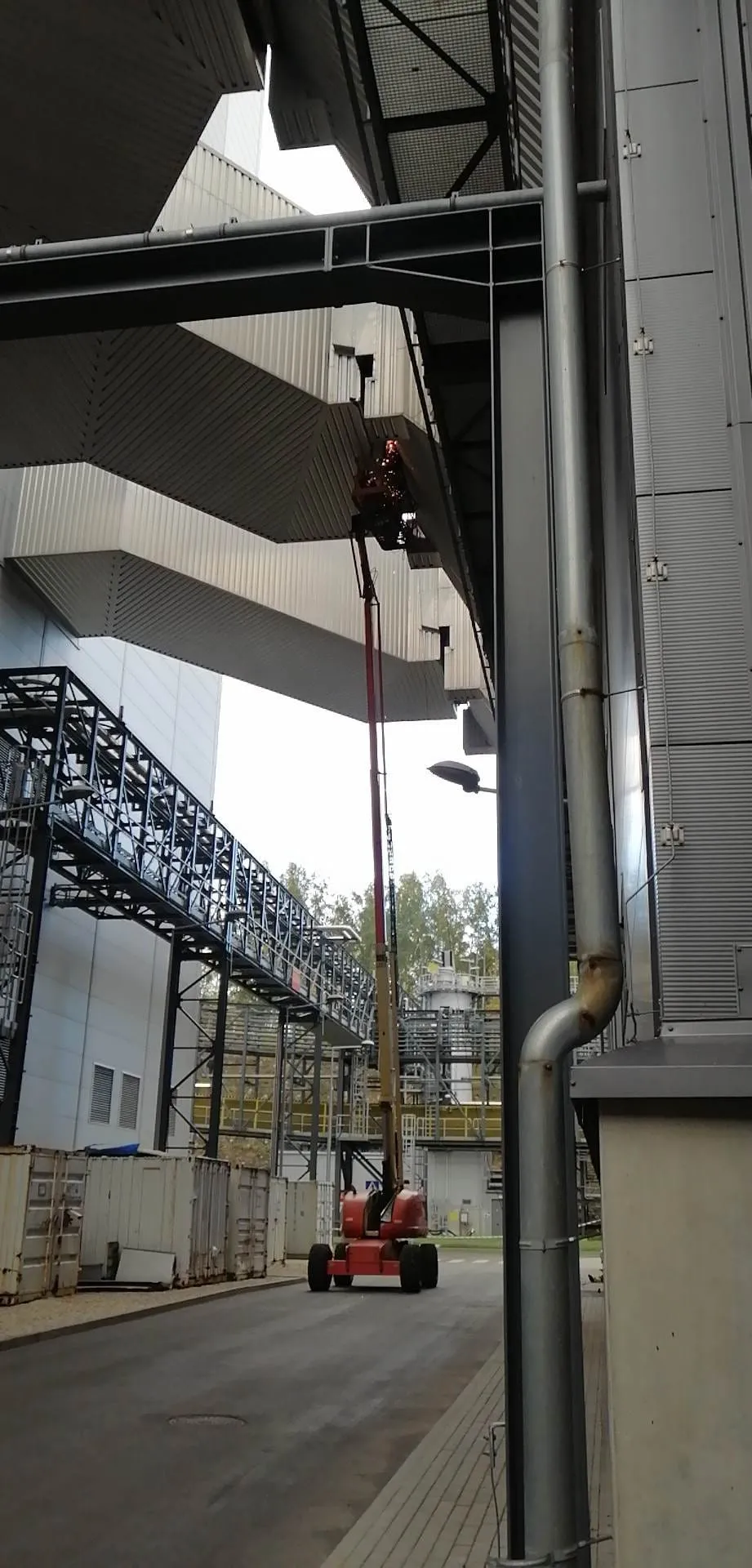
Why do regular inspections of compensators reduce the risk of failure?
Regular inspections of compensators allow for the detection of problems at a stage where they have not yet led to a serious failure. In industrial installations, this is particularly important because a damaged compensator can cause system leakage, production line stoppage, medium leakage, pipeline damage, or pose a threat to personnel.
Early diagnostics provide an opportunity to plan maintenance activities, order parts, and carry out replacements under controlled conditions. This is much safer and usually less costly than reacting only after a failure.
During the technical inspection, you can assess, among other things:
the degree of material fatigue in metal compensators,
development of corrosion on bellows, bolts, and steel elements,
loss of flexibility in rubber compensators,
degradation of thermal insulation and gas-tight layers in fabric compensators,
correctness of operation of supports, guides, and fixed points,
the impact of temperature, pressure, vibrations, and medium on the lifespan of the compensator.
This approach supports predictive maintenance. Instead of removing the effects of a failure, you can reduce the likelihood of its occurrence and better manage the technical condition of the installation.
If you want to reduce the risk of unplanned downtime, take advantage of compensator technical inspections. Inbras will help assess the condition of the components, indicate potential risks, and plan further maintenance actions.
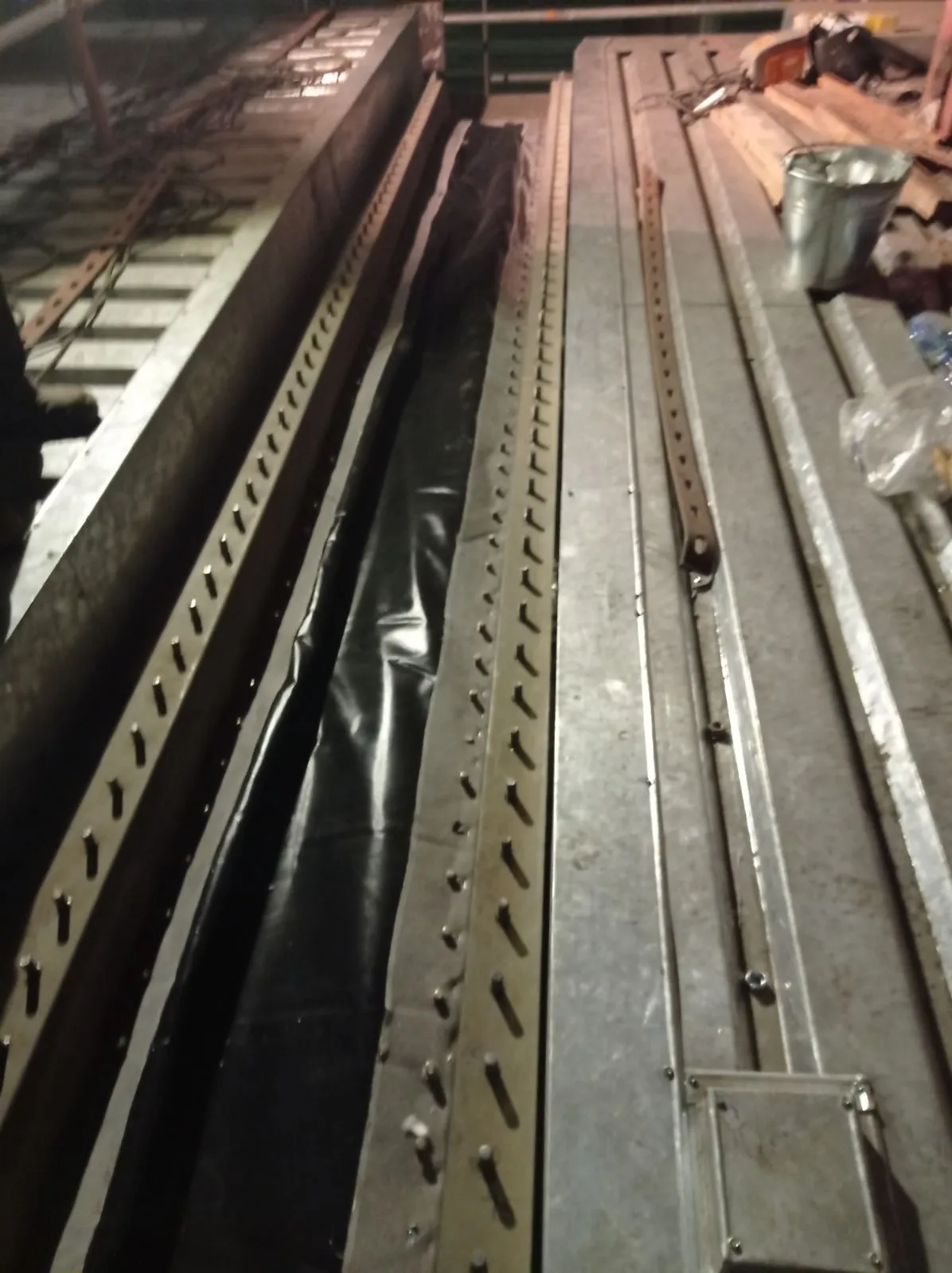
How is the installation of fabric, rubber, and metal compensators carried out?
The installation of compensators requires precision and knowledge of the working principles of each type of element. A fabric compensator is installed differently than a rubber compensator, and a metal compensator is different still. In every case, however, one thing is crucial: the compensator must not be used as an element to forcibly adjust misaligned pipes or ducts.
Installation errors are among the most common causes of premature damage. Excessive stresses, improper installation length, lack of supports, improper screw tightening, or leaving transport locks in place can cause even a well-chosen compensator to quickly lose its properties.
For metal compensators, maintaining the design installation length, controlling the initial tension, and removing transport locks only after proper pipeline fixation are of particular importance. The metal bellows must operate within the range specified by the design, without additional loads resulting from faulty installation geometry.
A rubber compensator requires even screwing, most often using a cross-pattern, while maintaining the correct torque. Overtightening can damage the flexible flange, while under-tightening can lead to leaks.
A fabric compensator requires careful placement of insulation layers, gaskets, and fastening elements. In exhaust ducts or high-temperature installations, gas-tightness and the protection of internal layers from overheating are particularly important.
Before completing the installation, it is necessary to check whether the pipeline or duct is properly supported. Fixed points, guides, and sliding supports determine whether the compensator will function as intended.
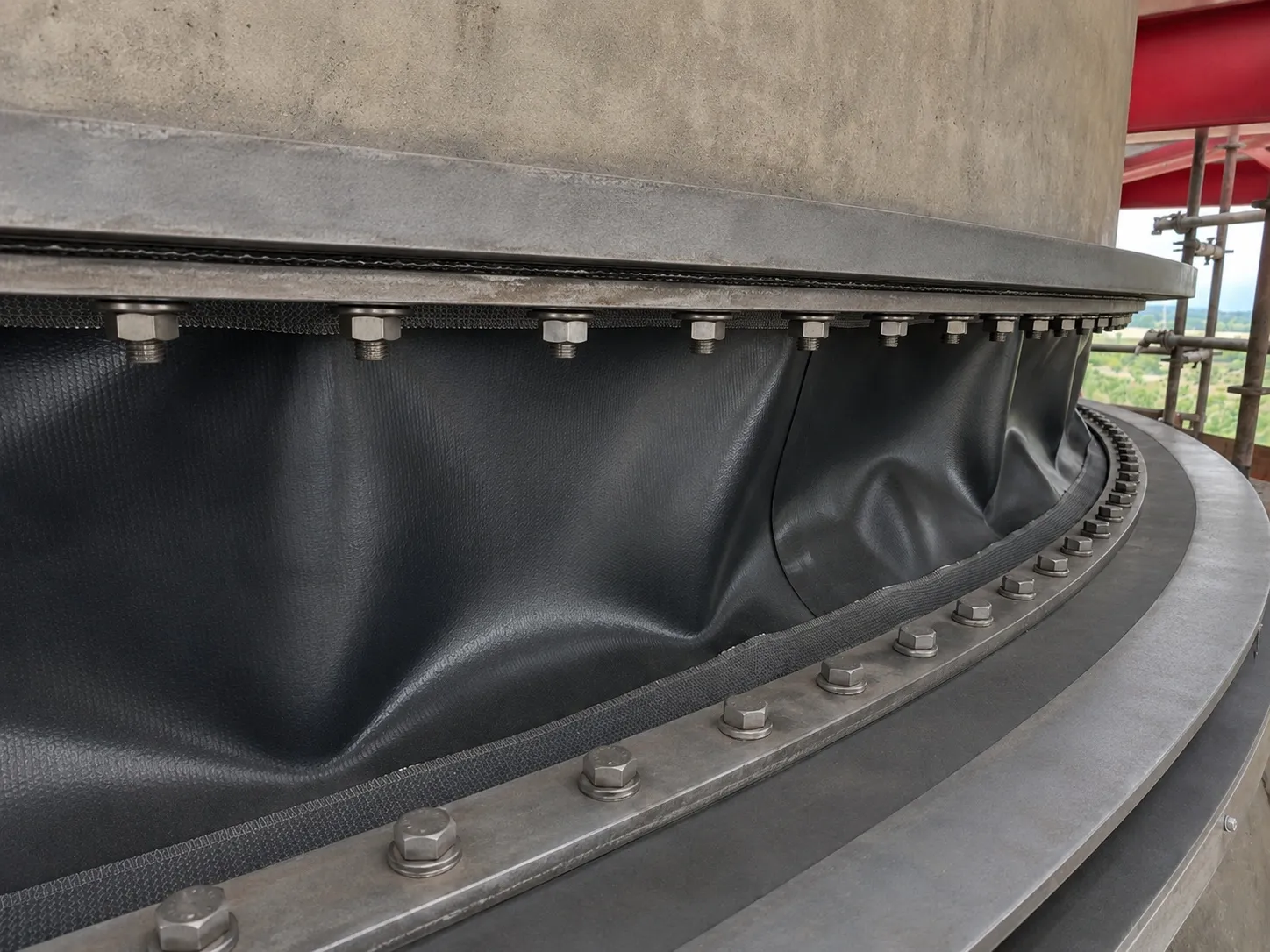
When is emergency compensator repair necessary?
Emergency compensator repair is necessary when the damage threatens the continuity of the process, the safety of the installation, the environment, or the employees. In such situations, quick diagnostics and the right decision are crucial: whether temporary protection is possible or immediate replacement of the component will be necessary.
The most common situations requiring urgent response include:
sudden leak of liquid, steam, gas, or exhaust fumes,
crack of the metal bellows,
puncture or burning of the fabric compensator,
rubber crack or exposure of reinforcing layers,
breakage of tie rods, hinges, or movement limiters,
deformation of the compensator after hydraulic shock,
damage after a sudden temperature or pressure spike,
abrasions of external covers threatening exposure of working layers.
Emergency repair is often aimed at protection. Its goal may be to limit leakage, stabilize the operation of the installation, and maintain production until the next planned shutdown. In other cases, immediate replacement of the compensator is necessary, especially when the damage involves load-bearing or sealing elements.
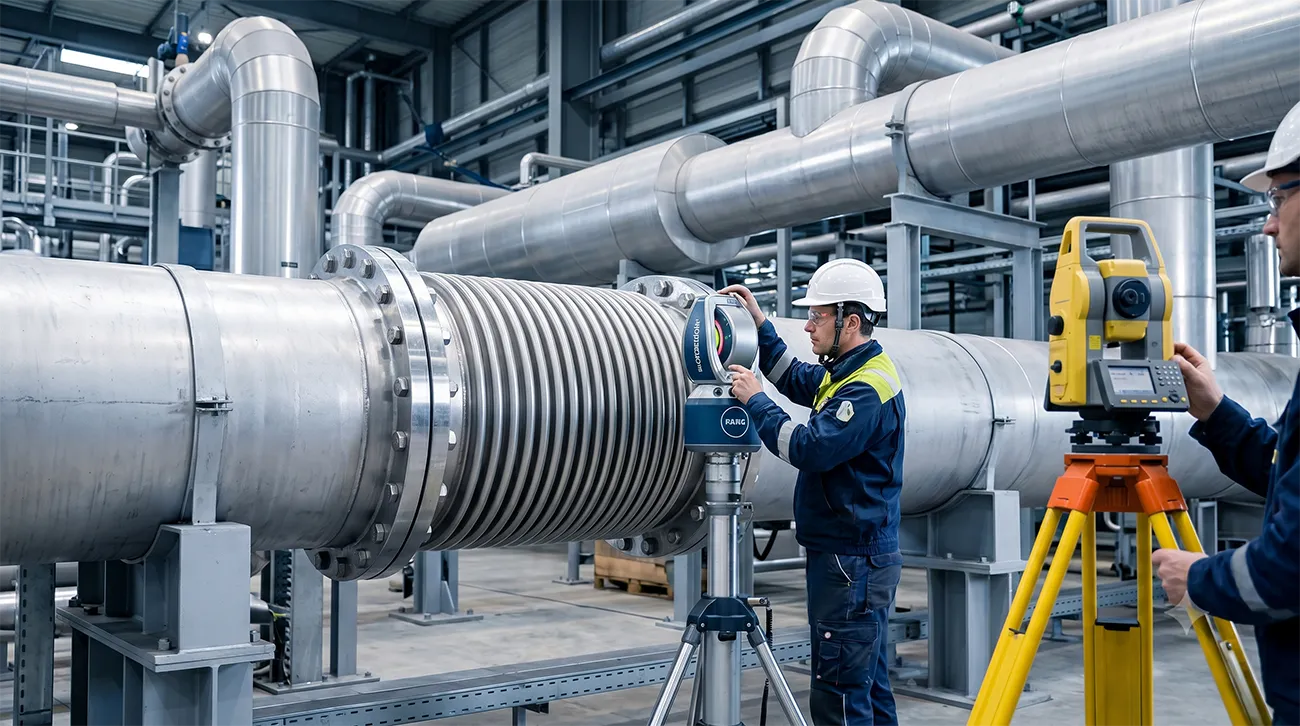
What is the significance of geometric and geodetic measurements in the compensator service?
Geometric and geodetic measurements allow for precise assessment of the position of pipelines, channels, supports, and compensator elements. They are particularly important when the installation has been operating for many years, has been modernized, or shows signs of deformation.
The compensator should operate within a specified range of displacements. If the pipeline is shifted, twisted, settled, or poorly supported, the compensator may take on loads for which it was not designed. This significantly shortens its lifespan.
Measurements help detect:
axial, transverse, and angular deviations,
support displacements,
foundation settlements,
steel structure deformations,
installation length errors,
non-compliance of the existing arrangement with design documentation.
In more complex cases, precise measurements or 3D laser scanning are used. This allows the actual geometry of the compensator node to be recreated and a replacement to be prepared that is tailored to real working conditions, not just the assumptions of archival documentation.
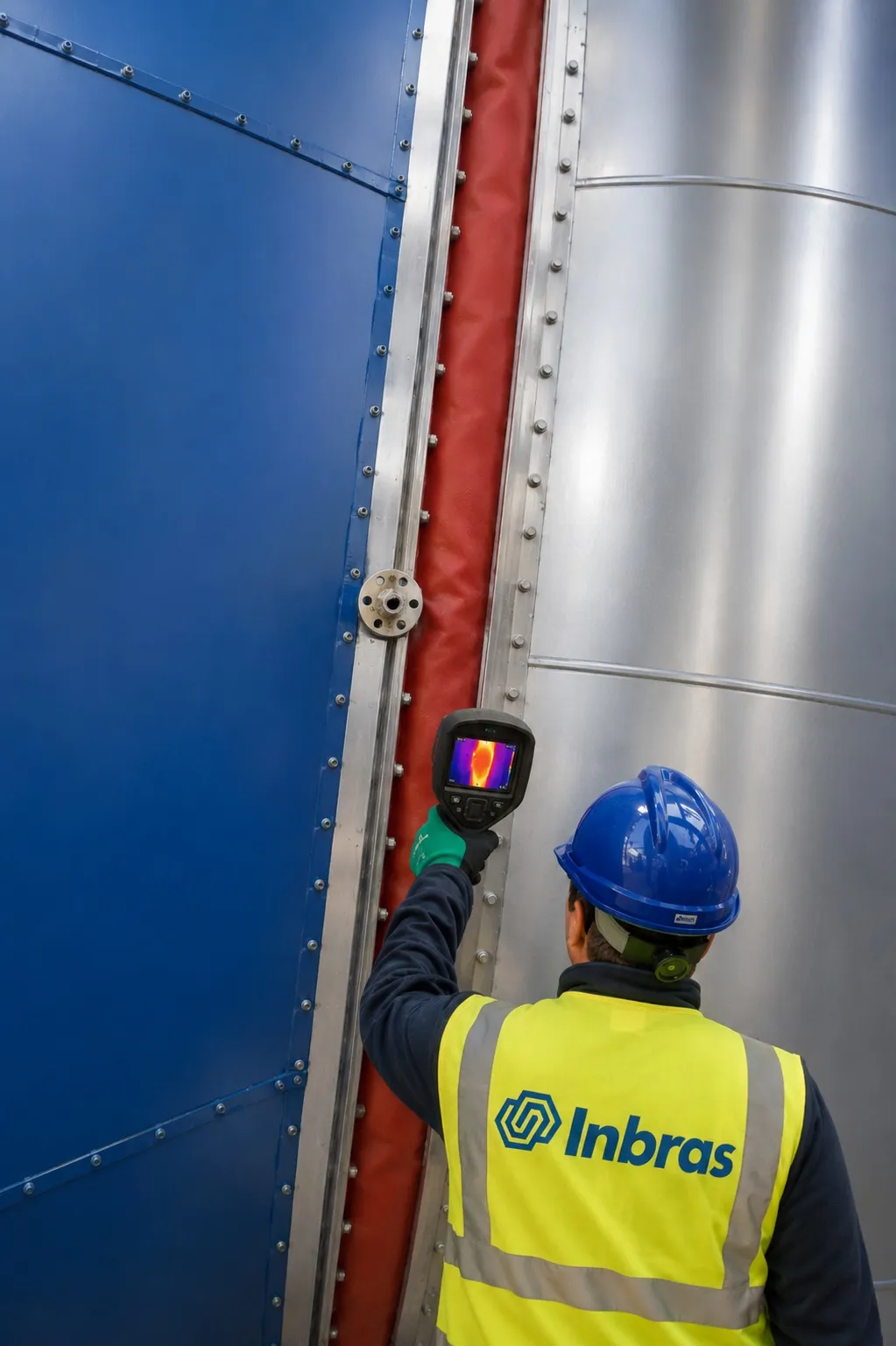
Thermographic inspections of compensators as a method for detecting anomalies
Thermographic inspections are a non-invasive diagnostic method that allows for assessing the temperature distribution on the surface of compensators and compensatory nodes. They are particularly useful in high-temperature installations, exhaust gas channels, power engineering, and processes where the medium carries a large amount of heat.
Thermography allows for the detection of overheating areas, loss of insulation or leakage before the problem becomes visible to the naked eye. A thermal imaging camera indicates so-called hot spots, or areas of elevated temperature. In fabric compensators, these may indicate degradation of insulation, damage to the inner layer, or local escape of hot gases.
Thermographic inspections help assess:
the condition of thermal insulation,
the risk of overheating of steel elements,
leakages in fabric compensators,
incorrect medium flow,
places where deposits accumulate,
the effectiveness of the designed insulation package.
A major advantage of this method is the ability to conduct diagnostics during the operation of the installation, without the need to stop it. Thermograms can also be part of the service documentation and the basis for further maintenance decisions.
Do you need to check compensators without stopping the installation? Inbras performs thermographic inspections that help quickly identify overheating areas, leakages, and loss of insulation.
How to select a compensator for installation operating conditions?
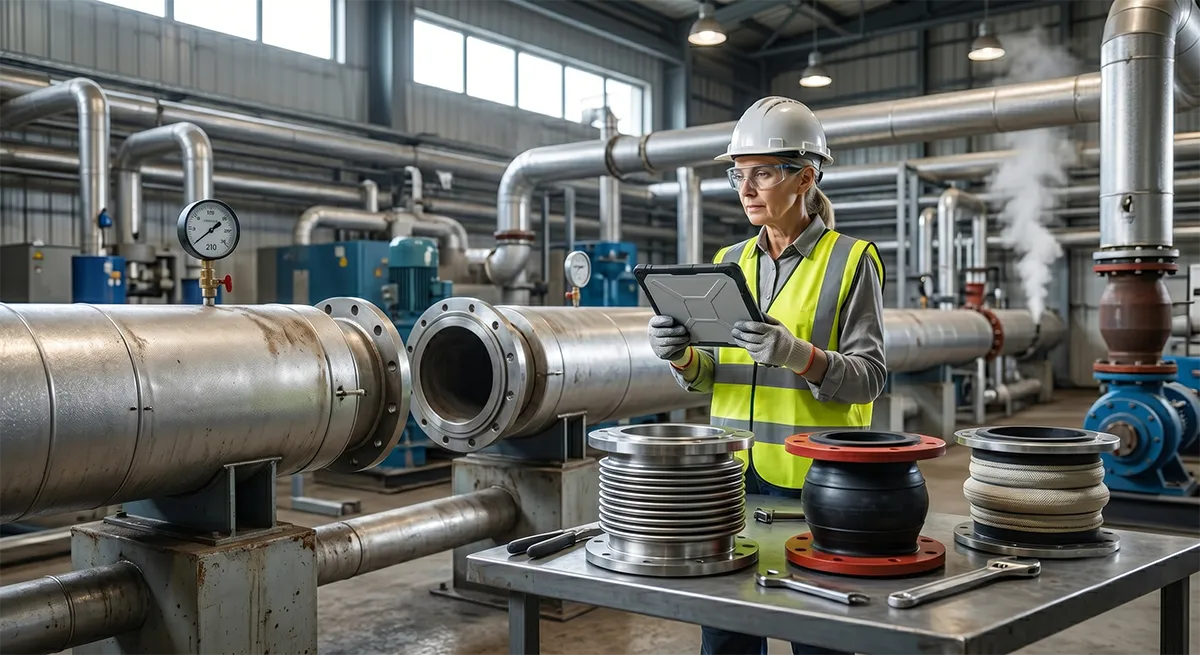
Selecting a compensator requires analysis of the installation's operating parameters and the environment in which the element will be operated. It is not enough to select the diameter and installation length. You must consider the medium, temperature, pressure, type of movements, frequency of operation, vibrations, chemical aggressiveness, and external conditions.
To make the correct selection, you mainly need:
nominal diameter of the pipeline or duct,
operating, design, and test pressure,
operating temperature and possible temperature spikes,
type of medium and its chemical properties,
presence of abrasive particles or deposits,
anticipated axial, lateral, and angular movements,
ambient conditions, e.g., UV radiation, dust, humidity,
safety requirements, including explosive hazard zones.
A metal compensator is usually suitable for high temperatures, pressure, and mechanical durability requirements. A rubber compensator is often used for liquid media, vibrations, and the need for good flexibility. A fabric compensator is used, among others, in flue gas ducts and gas installations, where resistance to temperature and the ability to work with large cross-sections is important.
A poorly selected compensator can quickly become damaged, but it can also transfer dangerous loads to adjacent installation elements. Therefore, selection should be carried out by specialists who can combine process data with practical service experience.
Designing Expansion Nodes and the Safety of the Entire System
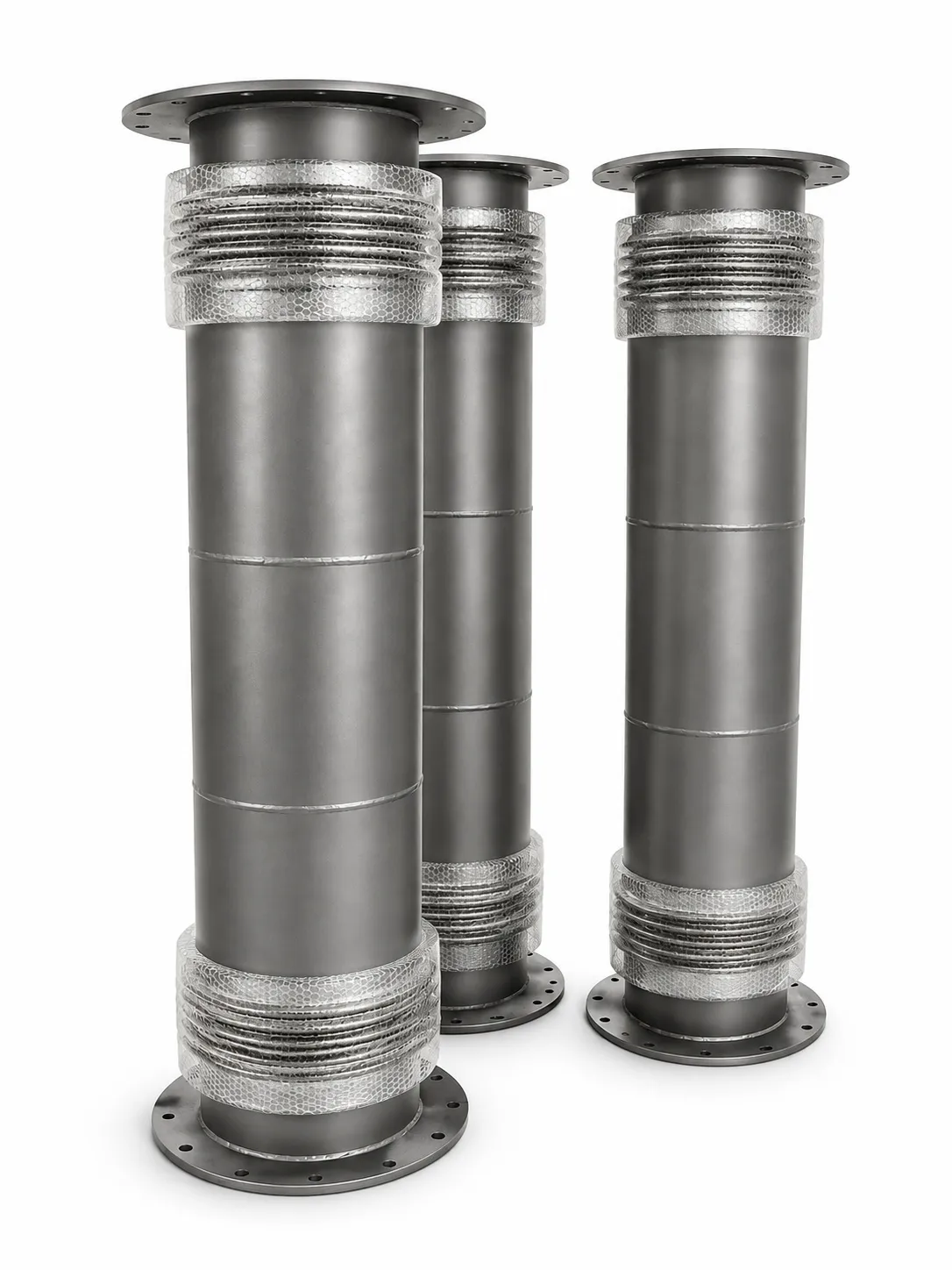
The compensator does not work alone. It is part of a larger system that includes a pipeline or duct, supports, guides, fixed points, limiting elements, and adjacent devices. Even the best compensator will not fulfill its function if the expansion node is designed or executed incorrectly.
Designing expansion nodes has a direct impact on the safety of the installation. Properly arranged fixed points absorb pressure thrust forces and limit uncontrolled displacements. Guides and sliding supports direct the pipeline's movement in the appropriate planes, preventing buckling and overloading of the compensator.
The project should take into account, among others:
direction and value of thermal displacements,
forces from internal pressure,
load from the mass of the pipeline and medium,
impact of vibrations,
arrangement of devices such as pumps, turbines, or exchangers,
possibility of safe future replacement of the compensator,
service and inspection access.
In high-pressure installations or where classic supports cannot be used, special solutions are designed, such as pressure-relieved compensators, elements with stays, hinges, or joints. This approach helps to reduce the risk of system overload and extend the lifespan of the entire installation.
What is the difference between warranty and post-warranty inspections of compensators?
Warranty and post-warranty inspections have a common goal: to keep compensators in a safe technical condition. However, they differ in scope, formality, and assessment method.
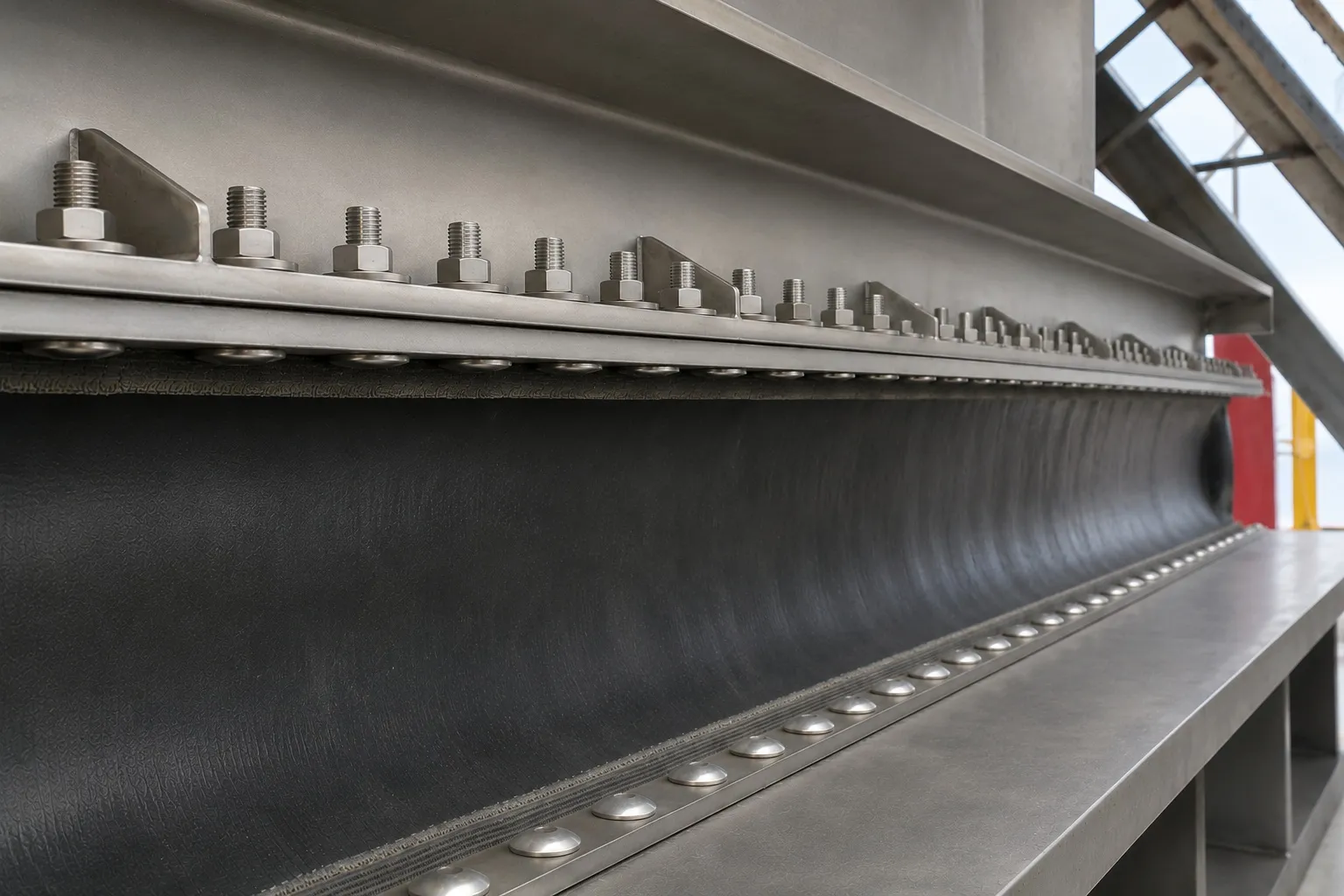
Warranty inspections are carried out in accordance with the manufacturer's requirements and the technical and operational documentation. Their purpose is to confirm that the compensator is being used in accordance with warranty conditions and that the installation is operating within the designated parameters. Such an inspection may include an assessment of assembly, inspection of visible damage, verification of operating conditions, and documentation of the technical condition.
Post-warranty inspections are usually more focused on assessing the wear and further suitability of the compensator for use. In this case, it is important to determine whether the element can safely operate until the next shutdown or whether it requires repair, modernization, or replacement.
In post-warranty inspections, the following are analyzed more frequently:
actual degree of material wear,
causes of premature damage,
possibility of using more durable material,
need for modernization of the node,
impact of changed operating parameters of the installation,
cost-effectiveness of repair compared to replacement.
A well-conducted post-warranty inspection helps plan the repair budget and reduce the risk of costly failures in the future.
When is it worth using the 24h compensator service?
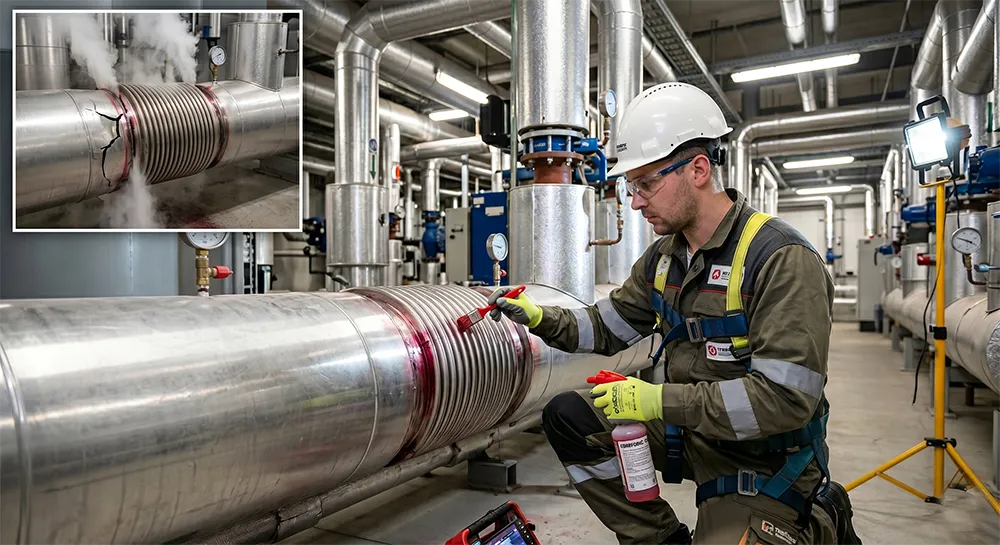
The 24h compensator service is needed when a failure cannot wait until the standard service term. This mainly applies to plants operating continuously, where every hour of downtime means production losses, logistical problems, or a threat to safety.
Such support is worth using in case of a sudden leak, damage to the compensator during installation operation, failure after a pressure or temperature surge, and also when a quick inventory of the element and preparation of a replacement is needed.
24h service is particularly important in industries such as:
energy and heat engineering,
chemical industry,
petrochemical and refineries,
flue gas and desulfurization installations,
continuous production plants,
installations with hot, toxic, or aggressive media.
In an emergency mode, the most important thing is a quick risk assessment. Specialists must determine whether it is possible to temporarily seal and maintain the installation, or whether it needs to be stopped and the compensator replaced. The decision should always take into account the safety of people, the environment, and the entire technological system.
In urgent situations, contact Inbras. The 24h compensator service allows for faster damage assessment, securing the installation, and planning actions to limit the consequences of the failure.
Przegląd kompensatorów najczęściej wykonuje się raz w roku, najlepiej podczas planowanego postoju technologicznego lub remontu instalacji. W trudniejszych warunkach pracy, np. przy wysokich temperaturach, dużych drganiach, mediach ściernych lub agresywnych chemicznie, kontrole powinny być wykonywane częściej. W takich przypadkach warto rozważyć dodatkowe inspekcje wizualne, pomiary oraz badania termowizyjne.
O konieczności naprawy lub wymiany mogą świadczyć wycieki, pęknięcia, przetarcia, deformacje, ślady przegrzania, korozja, utrata elastyczności albo nietypowe drgania instalacji. W kompensatorach metalowych szczególnie niepokojące są pęknięcia mieszków i korozja. W kompensatorach gumowych — spękania, zesztywnienia i odsłonięcie wzmocnień. W kompensatorach tkaninowych — przepalenia, przedarcia oraz lokalne przegrzania widoczne np. w badaniu termowizyjnym.
Tak, serwis kompensatorów może obejmować urządzenia różnych producentów. W takich przypadkach konieczna jest dokładna inwentaryzacja istniejącego elementu, analiza parametrów pracy oraz ocena konstrukcji. Na tej podstawie można dobrać zamiennik o tych samych lub lepiej dopasowanych parametrach technicznych.
W wielu przypadkach bezpieczna naprawa lub wymiana wymaga zatrzymania instalacji, odcięcia medium i obniżenia ciśnienia. W sytuacjach awaryjnych czasami stosuje się jednak rozwiązania tymczasowe, np. uszczelnienia awaryjne lub obejmy serwisowe, które pozwalają ograniczyć wyciek do najbliższego planowanego postoju. Decyzja zawsze powinna być poprzedzona oceną ryzyka.
Do prawidłowego doboru kompensatora potrzebne są dane takie jak średnica nominalna, ciśnienie robocze i projektowe, temperatura pracy, rodzaj medium, stan skupienia medium, przewidywane przemieszczenia osiowe, boczne i kątowe oraz warunki otoczenia. Istotne są również informacje o drganiach, zapyleniu, agresywności chemicznej, wymaganiach materiałowych i dostępnej przestrzeni montażowej.
Tak, badanie termowizyjne może pomóc w wykrywaniu nieszczelności, przegrzań i utraty izolacyjności cieplnej. Miejsca ucieczki gorącego gazu, pary lub spalin często są widoczne na obrazie termowizyjnym jako obszary o podwyższonej temperaturze. Termowizja jest szczególnie przydatna przy kompensatorach tkaninowych oraz instalacjach wysokotemperaturowych.
Doradztwo techniczne obejmuje analizę przyczyn uszkodzeń, ocenę warunków pracy instalacji, dobór materiałów, wskazanie możliwych modernizacji oraz wsparcie przy projektowaniu lub korekcie węzłów kompensacyjnych. Może dotyczyć również rozmieszczenia podpór, punktów stałych, prowadnic, deflektorów, izolacji i innych elementów wpływających na trwałość kompensatora.
Nie, każdy typ kompensatora wymaga innego podejścia serwisowego. Kompensator metalowy kontroluje się przede wszystkim pod kątem zmęczenia materiału, pęknięć, korozji i odkształceń mieszka. Kompensator gumowy wymaga oceny elastyczności, spękań, ubytków i stanu kołnierzy. Kompensator tkaninowy sprawdza się pod kątem przepaleń, nieszczelności, uszkodzeń warstw gazoszczelnych oraz izolacyjnych. Właśnie dlatego serwis powinien być prowadzony przez zespół, który zna specyfikę różnych konstrukcji i materiałów.