

Fabric expansion joints
Do łączenia rurociągów i kanałów spalin w instalacjach przemysłowych stosowany jest specjalny, elastyczny element. To tak zwany kompensator tkaninowy, którego zadaniem jest utrzymanie właściwej kompensacji przemieszczeń (zarówno cieplnych, jak i mechanicznych) w tych kanałach. Znajduje zastosowanie przede wszystkim podczas przesyłania sypkich i gazowych mediów. Dzięki niemu drgania zachodzące w łączonych kanałach ulegają redukcji, a niewspółosiowość zostaje zniwelowana. Nasze produkty powstały na bazie innowacyjnych rozwiązań i zachowują zdolność do pracy w różnych temperaturach. Są wykonane z elastycznych materiałów, dzięki czemu przechwytują przemieszczenia skierowane w różne strony.
Use
Our most common fabric expansion joints are multi-layer models. This design allows for optimal strength, tightness, and resistance to various temperatures. Single-layer models are used in environments requiring adequate chemical resistance, such as in areas with condensation and liquid vapors.
Scope of work performed:
Taking measurements on-site
Projects
Creating soft connector parts
Creating steel connector parts
Assembly
Supervision
We mainly supply:
Power Plants
Combined Heat and Power Plants
Chemical Plants
Brickworks
Cement Plants
Paper Mills
Clients from the steel, shipbuilding, and coking industries.
Types
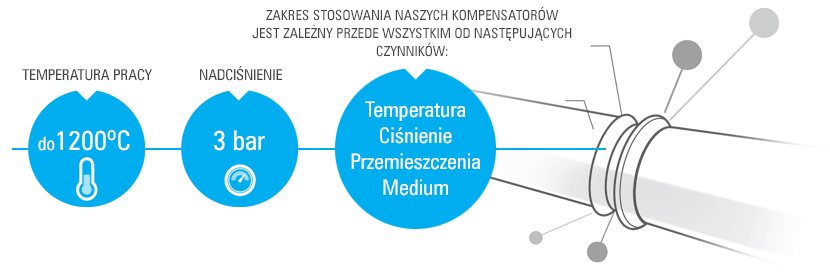
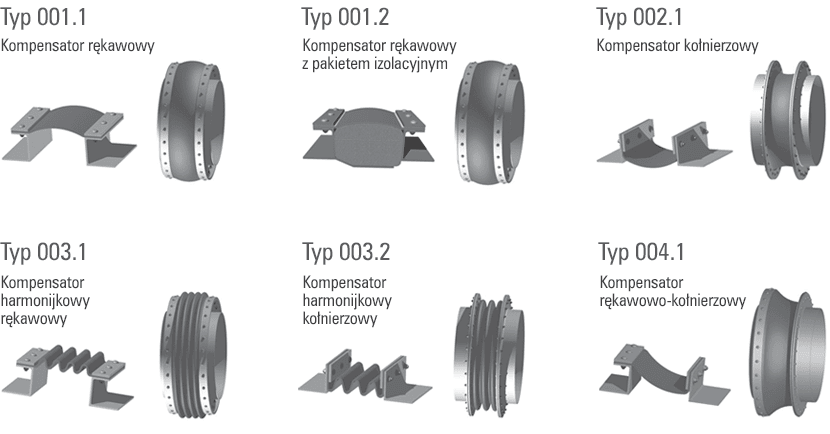
The fabric expansion joints we manufacture can have a circular, rectangular, or circular cross-section. The type of connection used depends on the cable and the following conditions:
Operation under positive or negative pressure
Pressure fluctuations
Temperature (in the case of high temperatures, an insulation package is required)
Amount of displacement transferred.
Basic types of compensators
Basic types of compensators
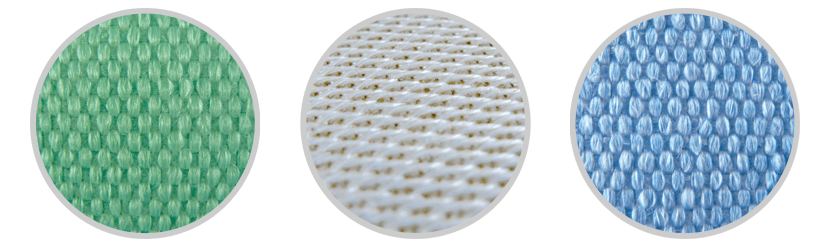
| Typ tkaniny | Temp. pracy [ºC] |
|---|---|
| Tkanina poliestrowa | 120 |
| Tkanina poliamidowa | 150 |
| Tkanina aramidowa | 280 |
| Tkanina szklana typ E | 500 |
| Tkanina szklana typ HT | 700 |
| Tkanina silikatowa | 1000 |
| Tkanina ceramiczna | 1200 |
Fabrics with elastomeric and thermoplastic coatings
| Powłoka | Tkanina nośna | Temp. pracy [ºC] | Charakterystyka |
|---|---|---|---|
| pvc | Polyester fabric | 60 | Good tightness and mechanical strength in low temperature ranges |
| epdm | Polyester fabric | 60 | Good mechanical and chemical resistance |
| silikon | Polyamide fabric | 150 | Fabric intended for connections where vibrations occur in the medium temperature range |
| silikon | Aramid fabric | 250 | Very high mechanical resistance while maintaining high tightness in the medium temperature range |
| FPM | Glass fabric | 200 | Very high chemical resistance |
| PTFE | Glass fabric | 260 | Very high chemical resistance |
Example construction of a multi-layer compensator sleeve
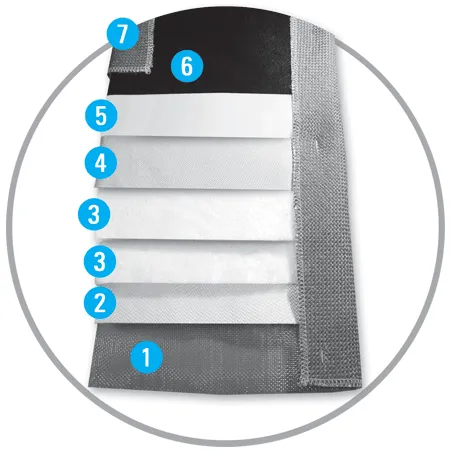
Support mesh
Insulating fabric
Insulating mat
Insulating fabric
Sealing foil
Sealing fabric
Reinforcing cuff
Fabric compensator elements
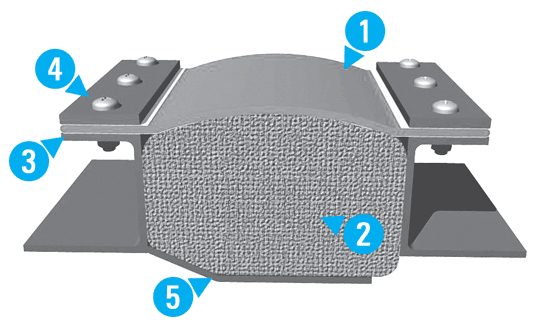
Gas-tight sleeve – a flexible sealing sleeve for a compensator. It consists of insulating and supporting fabrics, and a gas-tight membrane.
Insulation package – designed to reduce temperature and protect the sealing layers from its effects. It prevents dust accumulation in the expansion joint.
Compensator flange – used to connect the compensator sleeve to the duct. The flange height depends on the medium temperature.
Pressure flats – used to attach the sleeve to the compensator flange. The thickness and width of the strips ensure optimal sleeve attachment and joint strength.
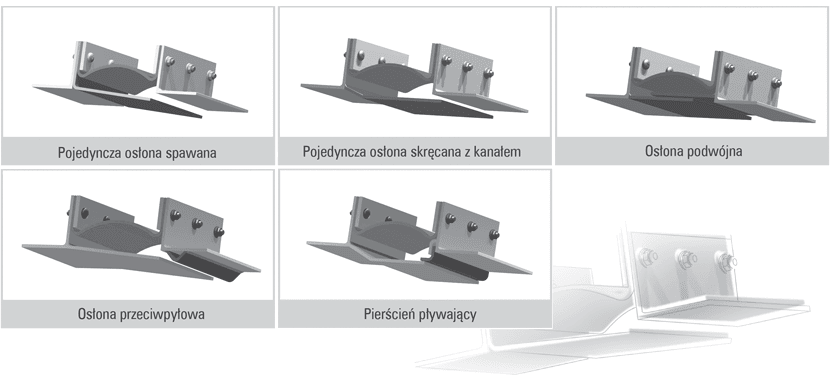
Directional plates – protect soft layers against damage, prevent dust from entering the compensator, improve the efficiency of the medium flow.
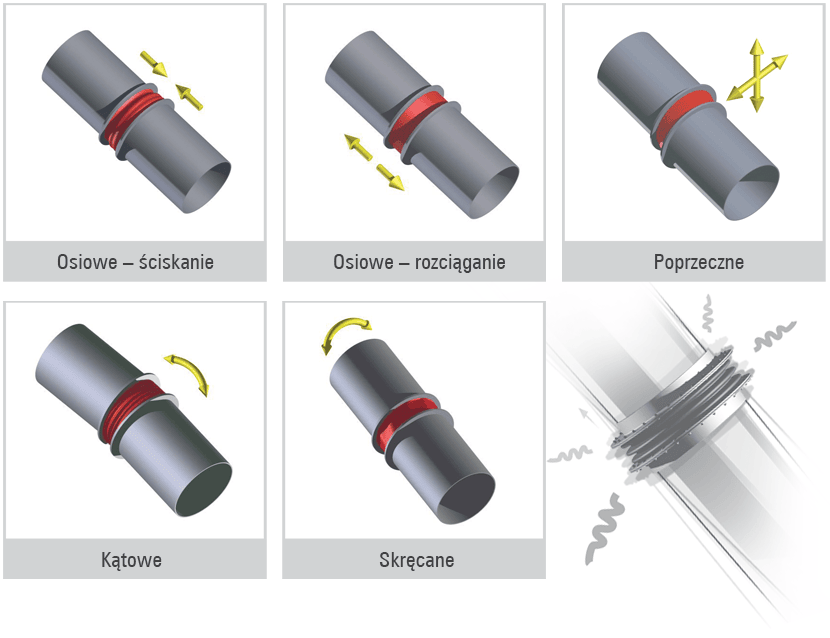
Compensation of thermal and mechanical displacements
The choice of element type depends on the type and magnitude of the movements being transferred, which can be single or combined. Their function also involves compensating vibrations, reducing channel misalignment, and damping noise.
Construction of guide plates
Our company recommends the use of internal guide plates, which are designed to:
protect soft components from damage,
prevent dust from accumulating,
increase the flow efficiency of the medium,
assist in the application of an insulation package in the expansion joint.